
A gap between front teeth is more common than you think. Discover 5 real truths about the causes, whether to fix it, and the safest treatment options.
A gap between front teeth is one of those things people either love as part of their unique smile or quietly wish would disappear. Known clinically as a diastema, it’s one of the most common cosmetic concerns dentists hear about, spanning every age group, from a child’s developing smile to an adult noticing a new gap that wasn’t there years ago.
This guide covers 5 honest truths about a gap between front teeth: what actually causes it, when it’s completely normal, when it might signal something worth addressing, and the range of treatment options available if you decide you want it closed.
Truth 1: A Gap Between Front Teeth Is Extremely Common
This might be the most reassuring truth of all. A gap between front teeth affects a significant portion of the population at some point, and its prevalence varies noticeably by ethnicity and genetics, with some population groups showing it far more commonly than others as a simple, natural variation rather than any kind of defect.
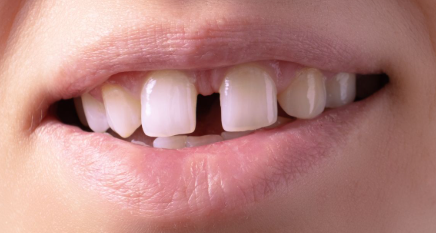
Truth 2: The Causes Are More Varied Than Most People Realize
Tooth and Jaw Size Mismatch
The most common cause is simply a mismatch between tooth size and jaw size, when teeth are smaller relative to the jaw, natural spacing appears between them, including a gap between front teeth specifically, since the front teeth are often the most visibly affected.
A Prominent Labial Frenum
The frenum is the small band of tissue connecting your upper lip to your gums. In some people, this tissue extends further down between the two front teeth than usual, physically holding them apart and creating or maintaining this kind of spacing that doesn’t close naturally over time.
Missing or Undersized Teeth
If a tooth is naturally smaller than average (a condition called microdontia) or a tooth is missing altogether, the remaining teeth often don’t fully close the space, resulting in a visible gap.
Tongue Thrust or Swallowing Habits
Some people push their tongue against the back of their front teeth during swallowing rather than against the roof of the mouth. Over years of repetition, this consistent pressure can gradually create or widen this kind of spacing between the two teeth.
Gum Disease and Bone Loss (In Adults Specifically)
This is an important cause that’s often overlooked. In adults, new spacing that appears later in life, rather than being present since childhood, can signal gum disease progressing and causing bone loss, which allows teeth to shift and drift apart. This is one situation where a new gap deserves prompt evaluation rather than just cosmetic consideration.
Childhood Habits
Prolonged thumb sucking or pacifier use during early childhood can create this kind of spacing as a side effect of sustained pressure, similar to how it affects overall bite alignment.
Truth 3: Not Every Gap Needs to Be Treated
Here’s a truth that surprises many patients: a gap between front teeth is not inherently a dental problem. If it’s stable, not widening over time, and not associated with any functional issue like difficulty biting or speech changes, it’s a completely valid cosmetic choice to simply leave it as is. Many people genuinely love the character it gives their smile, and there’s no clinical requirement to correct something that isn’t causing harm.
The exception is when this kind of spacing is new, actively widening, or linked to an underlying cause like gum disease, in which case addressing the root cause matters regardless of whether you ultimately choose to close the gap cosmetically.
Truth 4: There Are Multiple Ways to Close It, Not Just One
Braces or Clear Aligners
For a gap caused by tooth or jaw size mismatch, orthodontic treatment gradually moves the teeth together, closing the space in a way that’s typically stable and long-lasting once retention is properly maintained afterward.
Dental Bonding
A conservative, relatively quick option where tooth-colored composite resin is added to the sides of the front teeth, visually closing the space without requiring any tooth movement at all. This works particularly well for smaller gaps.
Porcelain Veneers
For a slightly larger gap, or when a patient wants to address shape and color at the same time, veneers offer a more comprehensive cosmetic solution, closing the space while also refining the overall smile appearance.
Frenectomy
If a prominent labial frenum is the actual cause, a minor procedure to trim or reposition this tissue is often necessary, sometimes combined with orthodontic treatment afterward to fully close the resulting space and prevent it from reopening.
Dental Implants or Bridges
If a missing tooth is the underlying cause, restoring the missing tooth itself addresses the gap directly and permanently, rather than treating the visible gap as an isolated cosmetic issue.
Truth 5: The Right Fix Depends Entirely on the Cause
This is the truth that ties everything together: successfully closing this kind of spacing long-term depends on correctly identifying why it’s there in the first place. Simply bonding or placing veneers over a gap caused by an untreated frenum or an active tongue thrust habit often results in the gap slowly reopening over time, since the underlying force causing it was never actually addressed. A proper evaluation, rather than jumping straight to a cosmetic fix, is what makes treatment genuinely lasting rather than a temporary cover-up.
Is a Gap Between Front Teeth Ever a Sign of a Health Problem?
In most cases, no, it’s a normal anatomical variation. But it’s worth paying closer attention if:
- The gap appeared recently in adulthood rather than being present since childhood
- It’s accompanied by loose teeth, receding gums, or bleeding
- It seems to be actively widening over just a few months
- You’ve noticed changes in your bite or difficulty chewing alongside it
In these specific situations, that spacing may be a visible symptom of an underlying issue like gum disease, rather than simply a cosmetic trait, and it’s worth having evaluated promptly.
Frequently Asked Questions
Can a gap between front teeth close on its own? In children, some gaps close naturally as permanent teeth fully erupt and the jaw finishes developing. In adults, gaps generally do not close without some form of treatment, since jaw and tooth development is already complete.
Is it bad to leave a gap between front teeth untreated? Not inherently. If it’s stable and not linked to gum disease or a functional issue, there’s no health-based reason it must be treated. Many people choose to leave it purely as a personal cosmetic preference.
Which is better for closing a gap, bonding or braces? It depends on the size of the gap and the underlying cause. Bonding works well for smaller, stable gaps, while braces or aligners are generally better for gaps caused by overall spacing issues across multiple teeth, since they address the broader alignment rather than just the visible gap.
Will a gap come back after treatment? It can, particularly if the root cause, like a prominent frenum or an active tongue thrust habit, wasn’t addressed alongside the cosmetic treatment. This is why proper diagnosis before treatment matters so much for a lasting result.
Can adults develop this kind of spacing even if they never had it before? Yes, and when this happens, it’s worth mentioning to your dentist specifically, since a newly appearing gap in adulthood can sometimes indicate gum disease and bone loss rather than a purely cosmetic development.
Conclusion
A gap between front teeth is, in the vast majority of cases, a normal and even distinctive part of someone’s smile rather than something requiring correction. Understanding the real range of causes, from simple genetics and tooth size to frenum tissue, habits, or in adults, gum disease, helps you make an informed choice about whether treatment is right for you, and ensures that if you do choose to close it, the fix actually lasts rather than gradually reopening.
If you’re considering treatment, or if a gap has appeared or changed recently, a proper evaluation is the best starting point to understand exactly what’s behind it.
At Joglekar’s Dental Solutions, evaluating a gap between front teeth includes checking for underlying causes like frenum attachment, bite patterns, and gum health, ensuring any treatment chosen addresses the actual cause for a lasting result.