
Ignoring wisdom teeth pain can lead to infection and damage. Learn the essential warning signs for safe, effective wisdom teeth removal.
Somewhere between the ages of 17 and 25, most people get an unwelcome visitor: the wisdom tooth. Named for arriving at an age when we’re supposedly wiser, these third molars are notorious for causing more trouble than almost any other tooth in the mouth.
Some people never feel a thing. Others experience swelling, pain, and pressure that builds for weeks before they finally see a dentist. The difference often comes down to one factor: whether the wisdom tooth has enough room to grow in properly — and whether it’s dealt with before complications set in.
This guide walks through what wisdom teeth are, why they cause problems, the warning signs that mean it’s time to act, and what safe, effective removal actually involves.
What Are Wisdom Teeth, Really?
Wisdom teeth are the third and final set of molars, located at the very back of the mouth — one in each corner, top and bottom. Most people have four, though some have fewer, and a small number of people never develop any at all.
The trouble is structural: by the time wisdom teeth are ready to emerge, the jaw has usually finished growing, and there’s often simply not enough space left for them. This is where most wisdom tooth problems begin.
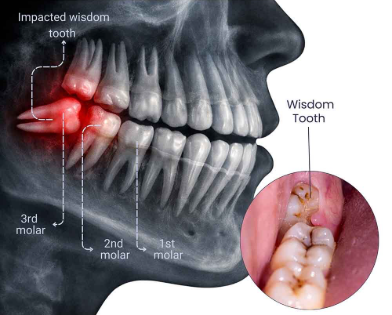
Why Wisdom Teeth Cause So Many Problems and Wisdom Teeth Removal is necessary
1. Impaction
When there isn’t enough room, a wisdom tooth can become impacted — stuck partially or fully beneath the gum, sometimes growing sideways into the neighboring tooth instead of straight up. Impacted wisdom teeth are one of the most common reasons for extraction, and they rarely resolve on their own.
2. Infection and Gum Disease
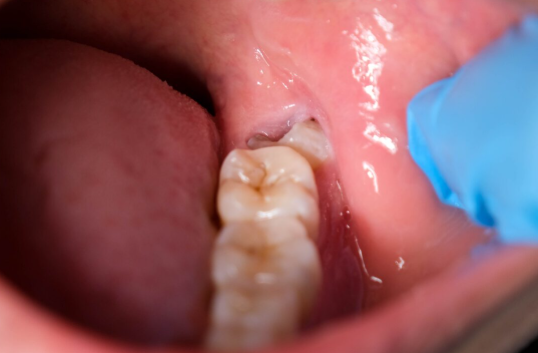
A partially erupted wisdom tooth creates a small flap of gum tissue over part of the tooth. Food and bacteria collect underneath this flap, and because it’s nearly impossible to clean properly, infection — called pericoronitis — often follows. Left untreated, this infection can spread to the jaw, cheek, and even the throat in severe cases.
3. Damage to Neighboring Teeth
An impacted wisdom tooth pressing sideways against the molar next to it can cause decay, bone loss, and root damage to that otherwise healthy tooth — sometimes putting a perfectly good molar at risk for reasons that have nothing to do with the molar itself.
4. Cysts and Jaw Damage
In rarer but more serious cases, a fluid-filled cyst can form around an impacted wisdom tooth. Left unaddressed for years, these cysts can hollow out sections of the jawbone, weakening its structure and, in extreme cases, requiring more extensive surgery to correct.
5. Crowding
Though the science is debated, many patients and dentists observe that erupting wisdom teeth can put pressure on the rest of the row, contributing to shifting and crowding — particularly frustrating for anyone who has already completed orthodontic treatment.
Warning Signs You Shouldn’t Ignore for Wisdom Teeth Removal
Pay attention if you notice any of the following at the back of your jaw:
- Persistent pain or pressure, especially if it comes and goes over weeks
- Swelling or tenderness in the gums behind your last visible molar
- A bad taste or odor that won’t go away, even with brushing
- Difficulty opening your mouth fully
- Swelling in the jaw or, in more advanced cases, the face
- Pain that spreads toward your ear or jaw joint
- Visible partial eruption of a tooth at the very back of your mouth
Any one of these on its own may seem minor. Together, or persisting for more than a few days, they’re a clear sign it’s time for an evaluation — ideally before infection or damage progresses further.
What Happens If You Delay Wisdom Teeth Removal?
It’s worth being honest about this, because many patients put off treatment simply because the tooth “doesn’t hurt yet”:
- Silent impaction can sit for years without symptoms, then flare into acute infection with little warning
- Chronic low-grade infection can affect overall oral health and, in some documented cases, contribute to broader health issues
- Bone and root damage to neighboring teeth often isn’t reversible once it’s occurred
- Cyst formation, though rare, becomes harder and more invasive to treat the longer it’s left
- Emergency extraction during an active infection is more complicated, more uncomfortable, and has a longer recovery than a planned, elective removal
This is exactly why dentists often recommend evaluating wisdom teeth in the late teens or early twenties, even before symptoms appear — a precise, well-timed removal is almost always simpler than one done under emergency conditions.
What Does Safe Removal Actually Involve?
Evaluation First
Before any extraction, a proper evaluation using X-rays or CBCT imaging is essential to understand exactly how the tooth is positioned, how close it sits to nerves, and how complex the extraction will be. This planning step is what separates a safe, predictable procedure from a risky, unplanned one.
The Procedure
Depending on the position of the tooth, removal may be straightforward or may require a small surgical approach if the tooth is impacted. Local anesthesia keeps the area numb throughout; for more complex cases or anxious patients, sedation options are available to keep the experience comfortable.
Recovery
Most patients recover within 3-7 days, with some swelling and mild discomfort in the first 48 hours being normal. Following aftercare instructions carefully — soft foods, avoiding straws, gentle rinsing — significantly reduces the chance of complications like dry socket.
Frequently Asked Questions
Do all wisdom teeth need to be removed? No. If a wisdom tooth is fully erupted, properly positioned, and easy to clean, it can sometimes be left in place and simply monitored. The decision depends entirely on individual anatomy, visible on X-ray or CBCT.
At what age should wisdom teeth be evaluated? Most dentists recommend an evaluation between ages 16 and 20, since roots are less developed and removal — if needed — tends to be simpler and recovery faster at a younger age.
Is wisdom tooth removal painful? The procedure itself is performed under anesthesia and is not painful. Some soreness and swelling afterward is normal and manageable with prescribed pain relief and proper aftercare.
What is dry socket, and how can I avoid it? Dry socket occurs when the blood clot at the extraction site is dislodged too early, exposing bone and nerve endings. Avoiding straws, smoking, and vigorous rinsing for the first few days significantly reduces this risk.
Can an impacted wisdom tooth cause pain elsewhere, like my ear or head? Yes. Referred pain toward the ear, jaw joint, or temple is common with impacted or infected wisdom teeth, and is often mistaken for an unrelated issue.
Wisdom teeth don’t always announce themselves clearly, some cause no symptoms at all until a problem has already developed underneath the surface. Understanding the warning signs, and getting an evaluation before pain becomes an emergency, is the difference between a simple, effective procedure and a complicated one.
If you’re experiencing any of the symptoms described above, or simply haven’t had your wisdom teeth evaluated, it’s worth getting imaging done to see exactly what’s happening beneath the gum line while the tooth is still easy to treat, Wisdom Teeth Removal is necessary.