
Whitening teeth with braces on might seem convenient, but it carries a real risk of uneven results. Learn the truth and the safer timing instead.
If you’re counting down the months until your braces come off, it’s natural to also start thinking about whitening teeth with braces still on, especially if you want your smile looking its absolute best the moment those brackets are removed. It’s a reasonable instinct, but it’s also one of those situations where the honest answer isn’t the one most patients expect, or want, to hear.
This guide covers the real risk behind whitening teeth with braces, why it tends to backfire rather than help, and the safer timing that actually gets you the bright, even result you’re hoping for.
The Short Answer: It’s a Risky Move
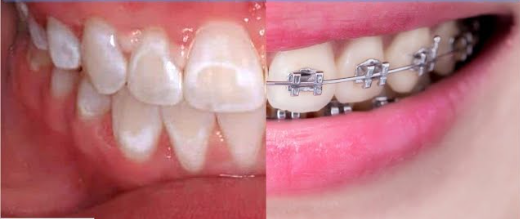
Whitening teeth with braces on is technically possible in terms of the product working, but it’s genuinely risky, and here’s the practical reason why: your brackets are covering a portion of each tooth’s surface. Whitening only works on the parts of the tooth it can actually reach, which means the visible surface around each bracket whitens while the small covered area underneath does not.
The result, once your braces finally come off, is a checkerboard-like pattern of slightly darker squares exactly where each bracket used to sit, on teeth that are otherwise brighter everywhere else. This uneven outcome is the single biggest reason whitening teeth with braces on tends to disappoint rather than deliver the safe, uniform smile most patients are picturing.
Why Uneven Whitening Happens
To understand this clearly, it helps to know how whitening actually works. Whitening agents penetrate the enamel surface and break down staining compounds through oxidation, but this only happens on surfaces the whitening product can directly contact. A bracket bonded to the center of a tooth physically blocks that specific area from any exposure at all, while the surrounding enamel whitens normally.
Attempting whitening teeth with braces on essentially guarantees this mismatch, since there’s no way to whiten underneath a bonded bracket without removing it first, which defeats the purpose of treatment happening at all.
Other Reasons to Wait
Increased Sensitivity Risk
Teeth undergoing orthodontic movement can already be somewhat more sensitive than usual, since the roots and supporting bone are actively adapting to new positions. Adding a whitening agent on top of this can intensify sensitivity beyond what’s typical during treatment, making whitening teeth with braces an uncomfortable choice on top of an ineffective one.
Wasted Product and Cost
Since only the exposed enamel whitens, a significant portion of the treatment’s effect is essentially wasted on surfaces that will be covered again the next time you eat or the product reapplies. This makes whitening teeth with braces on a genuinely inefficient use of money you’ll likely spend again anyway, doing it properly later.
Interference With Bracket Bonding
In rarer cases, certain whitening products can interact with the bonding material holding brackets in place, though this varies by product and isn’t the primary concern compared to the uneven-result issue.
What You Can Safely Do While Braces Are On
Even though whitening teeth with braces isn’t the safe move, there’s still plenty you can do to keep your smile looking its best throughout treatment:
- Brush thoroughly around each bracket, since plaque buildup around brackets is a common cause of white or discolored spots (decalcification) that become visible once braces come off, an issue arguably more damaging cosmetically than simply waiting on whitening
- Use a fluoride toothpaste and mouthwash to protect enamel strength throughout treatment
- Limit staining foods and drinks, coffee, tea, red sauces, since these can build up around brackets more noticeably than on smooth, unobstructed enamel
- Keep up with regular cleanings, which remove surface staining and plaque buildup that daily brushing around brackets can miss
- Avoid tobacco products entirely during treatment, since staining around brackets from tobacco use is particularly difficult to reverse later
The Safer Timeline: Whitening After Braces Come Off
Once your braces are removed, waiting a short period, generally a couple of weeks, allows any minor gum irritation from the removal process to settle before starting a whitening treatment. After that, you’re in an ideal position: every tooth surface is now fully exposed and accessible, meaning whitening at this stage produces a genuinely even, uniform result across your entire smile, exactly the safe outcome most patients were hoping for when they first considered whitening teeth with braces still on.
This timing also means the treatment isn’t wasted on surfaces that will be temporarily covered again, making it both safer and better value overall.
What About Clear Aligners Instead of Braces?
If you’re using clear aligners rather than traditional braces, the situation is different and generally more flexible. Since aligners are removed for eating and can be taken out for a whitening session, whitening during aligner treatment is far more practical and commonly done without the uneven-coverage problem that traditional brackets create. If you’re weighing braces versus aligners partly with this in mind, it’s worth discussing directly with your dentist.
Frequently Asked Questions
Will whitening strips work if I use them carefully around my brackets? Not reliably. Even careful application can’t fully reach the small area directly underneath each bonded bracket, so some degree of unevenness is very likely regardless of technique.
How long after braces come off can I start whitening? Most dentists recommend waiting about 2 weeks to allow any gum sensitivity from the removal process to settle before starting a whitening treatment.
Can I use whitening toothpaste while wearing braces? Whitening toothpaste has a much milder effect than gel-based whitening treatments and is generally considered lower-risk, though it still won’t reach the areas covered by brackets and offers limited visible improvement either way.
Does whitening with clear aligners carry the same risk? No, since aligners are fully removable, they don’t block any part of the tooth surface the way bonded brackets do, making it a much safer option during aligner treatment than whitening teeth with braces ever is.
Is it worth scheduling a professional whitening treatment right after my braces come off? Yes, this is generally the ideal window, your teeth are fully exposed for the first time in a while, and a fresh, even whitening treatment is a popular and effective way to complete the overall smile transformation right after debonding.
Whitening teeth with braces still on might feel like a convenient shortcut, but the risk of a patchy, uneven result almost always outweighs the benefit. The safer, more rewarding approach is focusing on protecting your enamel and preventing staining during treatment, then scheduling a proper whitening session once your braces come off and every surface is finally accessible. If you wish to consult a dentist be sure to contact our clinic.