
Struggling with Teeth Sensitivity? Discover the real causes behind sensitive teeth and effective treatment options at our Chinchwad dental clinic.
That sharp jolt when you sip something cold, or the wince when hot tea touches a certain tooth, is one of the most common complaints we hear. Teeth sensitivity affects people of all ages, and while it can feel alarming the first time it happens, it’s usually very treatable once you understand what’s actually causing it.
Here’s a complete look at why teeth sensitivity happens, what it means, and what actually helps.
What Is Teeth Sensitivity?
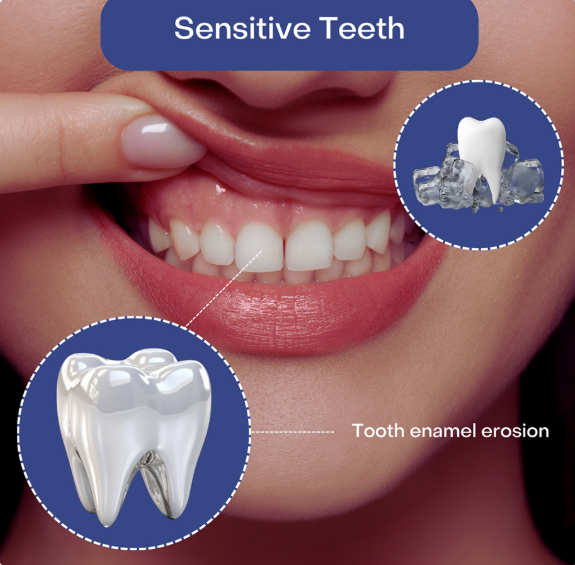
Teeth sensitivity is a sharp, temporary pain or discomfort triggered by certain stimuli, usually hot, cold, sweet, or acidic foods and drinks. Sometimes even breathing in cold air can trigger it. It happens when the protective layer of enamel on your teeth thins, or when your gums recede, exposing the more sensitive layer underneath called dentin.
Dentin contains tiny tubules that lead directly to the nerve of the tooth. Once exposed, everyday temperature changes and certain foods send signals straight to that nerve, and that’s the sharp discomfort you feel.
Common Causes of Teeth Sensitivity
1. Enamel erosion Frequent consumption of acidic foods and drinks, like citrus fruits, soda, and even certain sports drinks, gradually wears down enamel over time.
2. Gum recession As gums pull back from the tooth, either due to gum disease or aggressive brushing, the root surface becomes exposed, an area with no enamel protection at all.
3. Brushing too hard Ironically, brushing aggressively to “clean better” often accelerates enamel wear and gum recession, the exact things causing sensitivity in the first place.
4. Teeth grinding Grinding, especially at night, wears down enamel over time and can also cause micro-cracks that increase sensitivity.
5. Recent dental work Mild, temporary sensitivity after a filling, cleaning, or whitening procedure is normal and usually settles within a few days to weeks.
6. Tooth decay or a cracked tooth Sometimes sensitivity in a single, specific tooth points to something more localized, like a cavity or crack, rather than general enamel wear.
7. Teeth whitening products Over-the-counter whitening treatments, especially when overused, can temporarily increase sensitivity by affecting the enamel surface.
How We Diagnose the Real Cause
Sensitivity that shows up across multiple teeth usually points to a broader issue, like enamel erosion or gum recession. Sensitivity localized to just one tooth is more likely something specific, a cavity, a crack, or an old filling that needs attention.
During a checkup, we look closely at your enamel, gum line, bite pattern, and any visible decay, and where needed, we use imaging to see what’s happening beneath the surface. This is what separates a proper diagnosis from just masking the symptom.
How to Prevent and Manage Teeth Sensitivity
Use a soft-bristled toothbrush Switching to a soft brush and using gentler pressure protects both enamel and gums going forward.
Try a desensitizing toothpaste These contain compounds that help block the tubules leading to the nerve, reducing sensitivity over time with consistent use.
Limit acidic foods and drinks You don’t need to eliminate them, just be mindful of frequency, and rinse with water afterward when possible.
Address teeth grinding If grinding is the cause, a custom night guard protects your enamel while you sleep, preventing further wear.
Don’t skip regular checkups Catching gum recession or early enamel wear before it worsens makes a real difference in how manageable sensitivity stays.
Avoid whitening overuse Stick to professionally guided whitening rather than repeated at-home treatments, especially if you already notice sensitivity.
When Sensitivity Means Something More
If sensitivity is sudden, severe, isolated to one tooth, or accompanied by visible damage, swelling, or pain while chewing, it’s worth getting checked sooner rather than later. These signs can point to a cavity, cracked tooth, or infection that needs proper treatment, not just a desensitizing toothpaste.
Treatment Options We Use
Fluoride application A professional fluoride treatment strengthens enamel and can meaningfully reduce sensitivity in mild to moderate cases.
Dental bonding For exposed root surfaces, a bonding agent can cover sensitive areas and provide immediate relief.
Gum grafting In cases of significant gum recession, a graft can cover exposed roots permanently, addressing both sensitivity and long-term gum health.
Treating the underlying cause If a cavity or cracked tooth is behind the sensitivity, addressing that directly, through a filling, crown, or in more advanced cases, root canal treatment, resolves the sensitivity by fixing its actual source.
A Quick Note on Home Remedies
Some patients try things like clove oil or saltwater rinses for temporary relief, and these can help in the short term. But they don’t address the underlying cause, so relying on them long-term usually just delays proper treatment while the real issue continues.
Ready to Get to the Bottom of It?
Sensitivity is your teeth telling you something changed, whether it’s enamel, gums, or something more specific to one tooth. Come in, and we’ll find the actual cause instead of just managing the symptom.