
If your teeth feel rough after sweets, it could signal early enamel erosion. Learn the causes, risks, and how to protect your smile before damage sets in.
You finish a piece of chocolate or a sugary dessert, run your tongue over your teeth out of habit, and notice something odd — your teeth feel rough after sweets, almost chalky or gritty, instead of smooth like usual. Most people brush the feeling off (literally) and forget about it within minutes.
But this small, easy-to-ignore sensation is actually one of the earliest warning signs your enamel is sending you. It’s subtle, it doesn’t hurt, and that’s exactly why it gets missed for years — until it eventually turns into sensitivity, visible wear, or a cavity that could have been caught much earlier.
This article explains exactly why teeth feel rough after sweets, what’s actually happening at the microscopic level, and what to do about it before it becomes a bigger problem.
Why Do Teeth Feel Rough After Sweets? The Science Behind It
Every time you eat something sugary, the bacteria naturally living in your mouth feed on that sugar and produce acid as a byproduct. This acid immediately begins attacking the outer layer of your teeth — the enamel — in a process called demineralization.
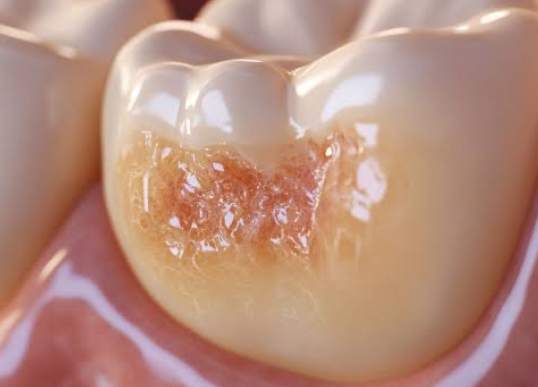
Healthy enamel is smooth, hard, and highly mineralized. When acid hits it, it temporarily softens the surface, pulling calcium and phosphate minerals out of the enamel structure. This is precisely why teeth feel rough after sweets: you’re feeling the surface of your enamel in a temporarily softened, slightly roughened state, before saliva has had the chance to neutralize the acid and begin remineralizing the surface again.
In a healthy mouth with good saliva flow and reasonable sugar intake, this cycle self-corrects within about 20-30 minutes. The problem arises when it happens too often, too intensely, or without enough recovery time in between.
Is It Normal for Teeth to Feel Rough After Sweets Occasionally?
Yes — an occasional rough feeling after something very sugary or acidic (think hard candy, soda, or sour treats) is a normal, temporary reaction and not, by itself, cause for alarm. The real concern is frequency and pattern.
If your teeth feel rough after sweets almost every time you eat something sugary, or if the roughness lingers well beyond half an hour, or if you’re also noticing sensitivity to cold, that pattern points toward something worth having evaluated — not just a passing sensation.
What This Roughness Can Signal Over Time
1. Early Enamel Erosion
Repeated acid exposure without adequate recovery time gradually wears down enamel faster than the mouth can rebuild it. Unlike a cavity, which is localized damage, erosion affects the entire tooth surface — and unlike a cavity, enamel that’s eroded away doesn’t grow back. This is exactly why noticing that your teeth feel rough after sweets early matters: it’s catching a reversible stage before it becomes permanent damage.
2. Increased Risk of Cavities
The same softened, roughened enamel that causes that gritty feeling is also more vulnerable to bacteria taking hold and forming a cavity. Rough surfaces trap plaque more easily than smooth ones, creating a cycle where roughness invites more bacterial buildup, which produces more acid, which causes more roughness.
3. Tooth Sensitivity
As enamel thins from repeated acid attacks, the underlying dentin layer — which contains microscopic tubules connected to the nerve — becomes more exposed. This is often what turns a harmless “teeth feel rough after sweets” sensation into a sharper, more uncomfortable sensitivity to cold, hot, or sweet foods over time.
4. A Sign of Dry Mouth
Saliva is what neutralizes acid and re-mineralizes enamel after a sugar exposure. If you notice teeth feeling rough after sweets more than usual, and also frequently experience a dry or sticky-feeling mouth, reduced saliva flow could be part of the picture — sometimes linked to medication, dehydration, mouth breathing, or certain medical conditions.
What Increases the Risk?
Certain habits make it far more likely that teeth will feel rough after sweets on a regular basis, rather than as an occasional exception:
- Frequent snacking on sugary foods throughout the day, rather than sweets consumed in one sitting — this keeps the mouth in an acidic state almost continuously
- Sipping sugary or acidic drinks slowly over a long period, like soda or sweetened tea, which extends acid exposure time significantly
- Low saliva flow, whether from dehydration, mouth breathing, certain medications, or age
- Brushing immediately after eating sweets, which can actually worsen the roughness — enamel is temporarily softened right after a sugar or acid exposure, and brushing during this window can physically wear away the weakened surface
- Existing enamel thinning from prior acid reflux, teeth grinding, or years of accumulated wear
How to Protect Your Enamel: Practical Steps
Wait Before You Brush
It feels counterintuitive, but the best move right after eating something sweet is to wait around 30 minutes before brushing. This gives saliva time to neutralize the acid and begin remineralizing the enamel surface naturally. Brushing too soon can do more harm than the sugar itself.
Rinse With Water Immediately
Swishing with plain water right after sweets helps physically dilute and clear away sugar and acid without disturbing the softened enamel the way brushing would.
Chew Sugar-Free Gum
This stimulates saliva flow, which speeds up the natural neutralizing and remineralizing process — a simple, protective habit that takes no extra time out of your day.
Reduce Frequency, Not Just Quantity
Eating a dessert once, in one sitting, is far gentler on enamel than the same amount of sugar spread out in small snacks across several hours. If your teeth feel rough after sweets often, look at how often you’re exposing them to sugar, not just how much sugar total.
Use a Fluoride Toothpaste
Fluoride actively helps re-harden and remineralize enamel that’s been softened by acid exposure, making it one of the simplest, most effective tools against this kind of everyday wear.
Stay Hydrated
Since saliva does most of the protective work here, dehydration directly reduces your mouth’s ability to recover after sugar exposure. Simply drinking enough water throughout the day supports this natural defense system.
When Should You See a Dentist About This?
An occasional rough feeling is not usually a reason to book an appointment on its own. But it’s worth getting evaluated if you notice:
- Teeth feeling rough after sweets on a near-daily basis
- Roughness that lingers for hours rather than fading within 30 minutes
- New or increasing sensitivity to cold, hot, or sweet foods
- Visible changes to your teeth — dullness, thinning at the edges, or a slightly translucent look near the tips
- A persistently dry mouth alongside the roughness
Catching enamel erosion in its early stages, while it’s still just a surface sensation and not yet a structural problem, is exactly the kind of thing a routine dental checkup is designed to catch.
Frequently Asked Questions
Is it bad if my teeth feel rough after eating sweets? An occasional rough sensation is normal and reflects temporary enamel softening from acid exposure. It only becomes a concern if it happens frequently, lingers long after eating, or comes with sensitivity.
Why do my teeth feel rough after sweets but not after other foods? Sugary and acidic foods trigger a stronger, faster acid response from oral bacteria than most other food types, which is why the sensation is most noticeable after sweets, soda, or sour foods specifically.
Can enamel that feels rough go back to normal? Mild, early-stage softening can remineralize and smooth back out with good saliva flow, fluoride use, and reduced acid frequency. However, once enamel has structurally eroded away rather than just softened, that portion doesn’t regenerate.
Does brushing right after sweets help or hurt? It can actually hurt. Enamel is temporarily softened right after a sugar exposure, and brushing during this window can wear it down further. Waiting about 30 minutes allows saliva to neutralize the acid first.
Can kids experience this too? Yes, and children’s enamel is generally thinner than adult enamel, making the same acid-exposure pattern potentially more impactful over time if frequent sugary snacking isn’t addressed early.
That gritty, rough feeling after a sweet treat is easy to dismiss, but it’s your enamel giving you real-time feedback about an acid attack happening on the tooth surface. Understanding why teeth feel rough after sweets — and adjusting a few small habits like rinsing with water, waiting before brushing, and reducing snack frequency — can make the difference between a temporary sensation and permanent enamel loss down the line.
If this is something you notice often, it’s worth having your enamel evaluated before the roughness turns into sensitivity or visible damage.