
Discover why rubber dam in dental treatment is essential for safe, contamination-free root canals.
If you’ve ever wondered why your dentist places a thin sheet of rubber around your tooth before starting root canal treatment, you’ve already met one of dentistry’s most important — and most underused — safety tools. It’s called a rubber dam, and at Joglekar’s Dental Solutions, we consider it non-negotiable for any treatment where precision and protection matter most.
Many patients have never heard of it. Some dentists, even experienced ones, skip it to save time. But when you understand what Rubber Dam in Dental Treatment actually does, you’ll understand why its absence is one of the quiet, hidden risks in dental care — and why its presence is a mark of a trusted, quality-focused clinic.
This article explains, in plain language, what a rubber dam is, why it matters, and what can go wrong when it’s left out.
What Is a Rubber Dam in Dental Treatment?
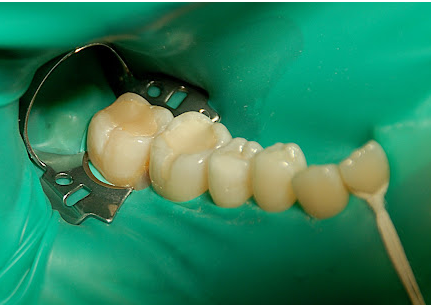
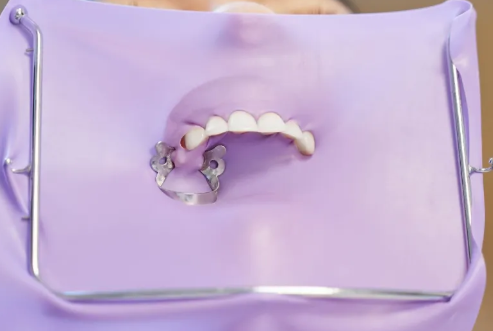
A rubber dam is a thin, stretchable sheet — usually made of latex or a latex-free alternative — that isolates one or more teeth from the rest of the mouth during treatment. A small hole is punched in the sheet, the tooth is pushed through it, and a metal clamp holds it firmly in place.
The result: the tooth being treated stands completely alone, cut off from saliva, blood, breath, and everything else happening in the mouth around it.
It sounds simple. Its impact on treatment outcomes is anything but.
Why Rubber Dam in Dental Treatment Is Essential — Not Optional
1. It Prevents Contamination of the Root Canal System
This is the single biggest reason rubber dam use is considered essential in modern endodontics. Saliva contains millions of bacteria per milliliter. During root canal treatment, the inside of the tooth is cleaned, shaped, and eventually sealed — and if saliva leaks into that space even briefly, bacteria can recontaminate a canal system that was just disinfected.
Without a rubber dam, this contamination risk is constant and largely invisible. You won’t feel it happening. But it can quietly undermine months or years of a treatment’s success, sometimes leading to reinfection and the need for retreatment.
With a rubber dam in place, that pathway is sealed off. The tooth stays precisely isolated from the very first cut to the final restoration.
2. It Protects You From a Real Physical Danger
During root canal treatment, dentists work with very small, sharp instruments — files, irrigating needles, and burs — often just millimeters from the back of your throat. Without a rubber dam, there is a genuine risk of a small instrument slipping and being swallowed or, more seriously, inhaled into the airway.
This isn’t a rare, theoretical concern. Case reports of swallowed or aspirated dental instruments exist precisely because rubber dam was not used. Rubber Dam in Dental Treatment acts as a protected barrier — a physical safety net between the working field and your airway.
3. It Keeps Irrigating Solutions Where They Belong
Root canal treatment uses chemical irrigants like sodium hypochlorite to disinfect the inside of the tooth. These solutions are effective at killing bacteria — and also irritating to soft tissue, gums, and especially dangerous if they leak past the isolated field onto oral mucosa or are swallowed.
A rubber dam contains these irrigants to the treatment area only, making the entire procedure safer and more controlled — for both patient and dentist.
4. It Gives the Dentist a Dry, Clear, Visible Field
Saliva and blood constantly seeping into the working area doesn’t just raise contamination risk — it also reduces visibility. A dry field means the dentist can see clearly, work more efficiently, and reduce the failure rate that comes from working blind in a wet, obstructed space.
Combined with magnification tools like an operating microscope, rubber dam isolation allows for a level of precision that simply isn’t achievable otherwise.
5. It Improves the Bond Strength of Restorative Materials
Many modern filling materials, including composite resins and bonding agents used to seal a tooth after root canal treatment, are highly sensitive to moisture. Even a small amount of saliva contamination during placement can weaken the bond and lead to early failure of the restoration — meaning leakage, sensitivity, or the need to redo the work sooner than expected.
Rubber dam isolation creates the completely dry environment these materials need to bond effectively and last.
What Happens Without a Rubber Dam? The Real Risks
It’s worth being direct about this, because patients deserve to know what’s at stake:
- Reinfection of the canal system due to saliva contamination, sometimes not apparent until months later when symptoms return
- Compromised seal at the final restoration, leading to leakage and decay underneath
- Instrument aspiration or ingestion, a rare but serious medical emergency
- Chemical burns or irritation from irrigant leakage onto gums or being swallowed
- Lower long-term success rates for root canal treatment overall
None of these are exaggerations — they are well-documented risks in dental literature, which is exactly why professional endodontic guidelines worldwide recommend rubber dam use as the standard of care for root canal treatment, not an optional extra.
Why Some Dentists Skip Rubber Dam in Dental Treatment (And Why That’s a Problem)
Rubber dam placement takes a few extra minutes. It requires the right clamps, sheets, and a frame — plus the skill to apply it comfortably, especially on teeth with unusual anatomy or limited space. Some dentists were never trained thoroughly in the technique, and others simply prioritize speed over the added protection.
This is exactly why hands-on rubber dam training matters so much — not just for patient safety in individual clinics, but for raising the standard of care across the profession as a whole.
What This Means for You as a Patient
The next time you sit in the dental chair for a root canal, ask your dentist one simple question: “Will you be using a rubber dam?”
A confident, immediate “yes” is a good sign. It tells you that your dentist prioritizes a safe, contamination-free, precisely controlled treatment — not just a faster one.
At Joglekar’s Dental Solutions, rubber dam isolation is a standard part of every root canal and restorative procedure where it’s clinically indicated. It’s one of the simplest ways we protect the long-term success of your treatment and your safety in the chair.
Frequently Asked Questions
Is rubber dam placement uncomfortable? Most patients report that the clamp and sheet feel unusual for the first minute but are not painful. Many actually find it more comfortable than treatment without it, since it keeps water and debris away from the throat, reducing the need to swallow repeatedly during treatment.
Can I still breathe normally with a rubber dam in place? Yes. The rubber dam only isolates the tooth being treated — it does not cover your nose or block your airway. You breathe normally through your nose throughout the procedure.
Is rubber dam only used for root canal treatment? No. It’s also recommended for composite fillings, especially in patients with a high cavity risk, and for certain restorative and cosmetic procedures where a dry field is essential to bond strength.
What if I have a latex allergy? Latex-free rubber dam sheets are widely available and work identically. Simply inform your dentist beforehand.
Conclusion
A rubber dam might look like a small, simple piece of equipment, but it represents one of the clearest dividing lines between careful, evidence-based dental treatment and treatment that leaves outcomes to chance. It protects against contamination, protects against physical risk, and directly improves the long-term success of the work being done in your mouth.
When choosing a dentist for root canal or restorative treatment, rubber dam use isn’t a small detail — it’s a meaningful signal of how seriously a clinic takes precision and patient safety.