
Discover 9 powerful benefits of Implant-Supported Teeth for loose dentures. Enjoy better stability, comfortable chewing, and a confident smile in Chinchwad, Pune.
Losing natural teeth can affect much more than your smile. It can change how you eat, speak, laugh, and interact with other people. For millions of people, removable dentures offer an affordable and practical solution to missing teeth. However, when dentures become loose or uncomfortable, everyday activities can become a constant source of frustration.
Imagine sitting at a family dinner and worrying that your dentures might slip while chewing. Perhaps you’ve stopped eating your favourite foods because your dentures move when you bite. You may even hesitate to laugh freely or speak confidently in public.
These problems can affect your quality of life, but modern dentistry offers solutions.
Implant-Supported Teeth provide an alternative for patients who want greater stability, improved chewing comfort, and more confidence in their replacement teeth.
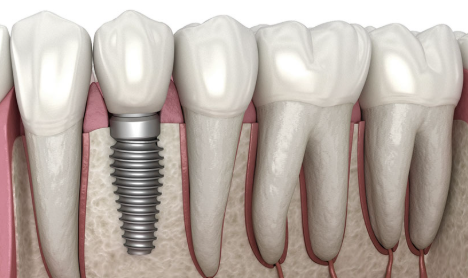
Unlike conventional dentures that rely primarily on the gums for retention and support, implant-based restorations use titanium dental implants placed within the jawbone to help secure replacement teeth.
The result can be a more stable and comfortable restoration designed around the patient’s individual needs.
In this comprehensive guide, we’ll explore how Implant-Supported Teeth work, their nine major benefits, different treatment options, possible limitations, costs, and what patients should expect before choosing this treatment.
Why Do Traditional Dentures Become Loose Over Time?
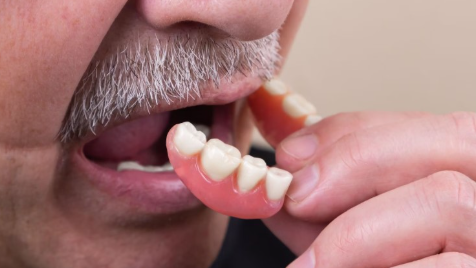
Traditional dentures are designed to rest on the gums and underlying jawbone. Their stability depends on factors such as the shape of the jaw, available supporting tissues, saliva, muscular coordination, and the accuracy of the denture fit.
When natural teeth are extracted, the jawbone that previously supported their roots gradually undergoes changes.
This process is called residual ridge resorption.
As the underlying bone changes shape, an older denture may no longer fit the gums accurately.
6 Common Causes of Loose Dentures
- Jawbone shrinkage: After tooth loss, the jawbone gradually reduces in volume, changing the support available for dentures.
- Changes in gum shape: Gum tissues and underlying structures can change over the years, creating gaps beneath the denture.
- Poorly fitting dentures: An incorrectly designed or worn denture may move during eating or speaking.
- Reduced saliva: Dry mouth can make retention of conventional dentures more difficult.
- Wear and tear: Denture teeth and bases gradually wear down, potentially affecting chewing and stability.
- Natural muscle movements: Movement of the tongue, lips, and cheeks may dislodge a poorly fitting denture.
Why Are Lower Dentures Often More Difficult to Wear?
Many patients find their lower dentures more troublesome than their upper dentures.
The upper jaw generally provides a larger surface area for denture support. The palate can also contribute to denture retention.
In contrast, the lower jaw offers a smaller supporting area, and the tongue constantly moves close to the denture.
This makes conventional lower dentures particularly vulnerable to movement.
For patients experiencing repeated instability, Implant-Supported Teeth may provide a more secure alternative.
However, not every loose denture requires implants. Sometimes a professional adjustment, reline, or replacement can restore acceptable comfort.
What Are Implant-Supported Teeth?
Implant-Supported Teeth are replacement teeth connected to dental implants that have been surgically positioned within the jawbone.
Dental implants function as artificial tooth-root substitutes.
They are commonly manufactured from biocompatible titanium and designed to integrate with the surrounding bone through a biological process known as osseointegration.
Once the implants achieve suitable stability, specially designed connectors or prosthetic components can be attached.
These components support or retain artificial teeth, improving their stability during chewing and other everyday functions.
How Do Dental Implants Hold Replacement Teeth?
The system generally consists of three components:
- Dental implant: A titanium fixture surgically placed within the jawbone.
- Prosthetic connection: An abutment, attachment, or connecting component that joins the implant to the restoration.
- Replacement teeth: A denture, bridge, or full-arch prosthesis that restores appearance and function.
The implant provides anchorage within the jawbone, while the prosthetic components determine how the replacement teeth are retained.
There are two main treatment approaches.
Type 1: Removable Implant-Supported Teeth
Removable Implant-Supported Teeth are often called implant overdentures or snap-on dentures.
These dentures connect to dental implants through specialized attachments.
The patient can remove them for cleaning, but the attachments provide additional retention while eating and speaking.
In suitable cases, a lower overdenture can be retained using two carefully positioned implants.
Other clinical situations may require additional implants.
Type 2: Fixed Full-Arch Implant Restorations
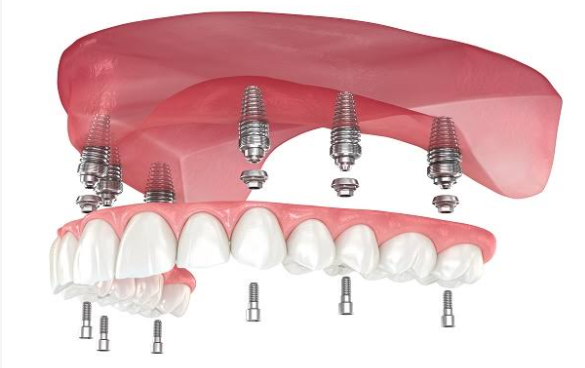
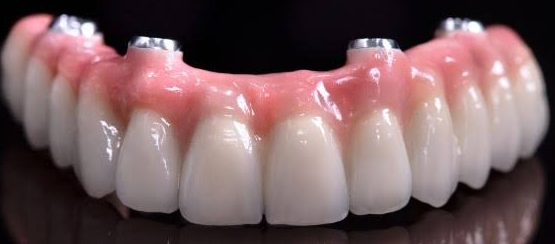
Fixed Implant-Supported Teeth are attached securely to multiple dental implants.
The patient does not remove these restorations during normal daily activities.
The dentist can remove Implant-Supported Teeth when maintenance, cleaning, or repair is required.
Fixed full-arch restorations may use four, six, or another clinically appropriate number of implants, depending on available bone, jaw anatomy, bite forces, and prosthetic design.
Removable Dentures vs Implant-Based Restorations: Understanding the Difference
Before selecting a treatment, patients should understand how the different options compare.
| Feature | Conventional Dentures | Implant Overdentures | Fixed Implant Teeth |
|---|---|---|---|
| Retention | Primarily gums and surrounding tissues | Dental implants and attachments | Dental implants |
| Patient removal | Yes | Yes | No |
| Stability | Depends on denture fit and anatomy | Generally improved | Generally high |
| Chewing comfort | Can be limited by movement | Often improved | Often improved |
| Cleaning | Remove and clean | Remove and clean attachments | Clean carefully in the mouth |
| Surgery required | No | Yes | Yes |
| Initial cost | Generally lower | Intermediate | Generally higher |
| Maintenance | Relines, repairs, replacement | Attachment care and possible relines | Professional prosthetic maintenance |
Both types of Implant-Supported Teeth can offer advantages over unstable conventional dentures, but the best choice depends on the patient’s clinical condition, preferences, and budget.
9 Powerful Benefits of Dental Implant-Supported Teeth
1. Greater Stability While Eating
One of the biggest difficulties faced by denture wearers is unwanted movement during meals.
When a traditional denture shifts while biting or chewing, the patient may struggle to apply sufficient chewing force.
This can make eating uncomfortable and unpredictable.
Implant-Supported Teeth provide additional anchorage that helps reduce movement during chewing.
For example, imagine a patient who has difficulty eating chapati or cooked vegetables because their lower denture repeatedly lifts from the gums.
A properly designed implant-retained denture may offer enough additional retention to make these activities more comfortable.
The amount of improvement varies with the design of the prosthesis, the available bone, and the patient’s oral condition.
Although implant restorations are generally more stable, they do not necessarily feel identical to natural teeth.
2. Improved Ability to Enjoy Different Foods
Food is closely connected with nutrition, culture, family life, and personal enjoyment.
People with loose dentures frequently begin modifying their diets.
They may avoid firm fruits, vegetables, nuts, or foods that require prolonged chewing.
Some prefer soft foods because they are easier to manage with unstable dentures.
Over time, these restrictions may reduce dietary variety.
Implant-Supported Teeth can improve chewing function, making it easier for many patients to enjoy a broader range of foods.
A patient who previously avoided apples or certain vegetables may gradually find these foods more manageable after successful treatment.
However, the ability to chew depends on multiple factors, including implant stability, prosthesis design, bite relationships, opposing teeth, and muscle function.
During healing, patients must follow the prescribed diet, and even after treatment they should avoid excessively hard objects that could damage the restoration.
3. More Confidence While Speaking
Speech requires careful coordination between the tongue, lips, cheeks, palate, and teeth.
Poorly fitting dentures can sometimes move during speech, affecting pronunciation.
Patients may experience clicking sounds, altered speech patterns, or difficulty pronouncing certain words.
These problems can become particularly embarrassing during professional meetings, presentations, or social conversations.
Implant-Supported Teeth can improve confidence by helping stabilize replacement teeth.
When the restoration moves less, patients may feel more comfortable speaking without constantly worrying about denture displacement.
Nevertheless, speech also depends on tooth position, prosthesis thickness, tongue space, and the design of the replacement teeth.
Some patients need an adjustment period after receiving new restorations or Implant-Supported Teeth.
4. Reduced Gum Irritation and Painful Pressure Points
Loose dentures can create repeated friction against the gum tissues.
During chewing, the denture may move and concentrate pressure on specific areas.
This can produce soreness, irritation, or painful ulcers.
Patients sometimes describe a burning sensation or repeated discomfort in the same location.
Implant-Supported Teeth may reduce movement-related irritation by improving retention and distributing functional forces differently.
Fixed restorations generally transmit their functional loads through the implants.
Removable implant overdentures may still receive some support from the gums, depending on their design.
Importantly, poorly designed implant restorations or Implant-Supported Teeth can also create pressure points or other complications.
Persistent ulcers, bleeding, swelling, or discomfort should always be evaluated by a dentist.
5. Greater Confidence While Smiling and Socializing

A smile is one of the simplest ways people communicate happiness and confidence.
Unfortunately, some patients with loose dentures begin covering their mouths while laughing.
Others avoid smiling in photographs or feel uncomfortable during social gatherings.
The concern may not always be visible to other people, but it can strongly affect how the patient feels.
Implant-Supported Teeth can help improve confidence by providing more stable replacement teeth.
A well-designed restoration also considers tooth shape, colour, size, position, lip support, and facial proportions.
Modern digital dentistry can help clinicians evaluate these factors during treatment planning.
The objective should be a natural-looking smile that complements the patient’s face rather than an artificial or excessively bright appearance.
While improved appearance can contribute to confidence, the psychological benefits vary from person to person.
6. Less Dependence on Denture Adhesives
Denture adhesives are commonly used to improve the retention of conventional removable dentures.
These products may be helpful in appropriate situations, but they cannot compensate for every problem associated with a poorly fitting denture.
Some patients become dependent on adhesive creams or powders and feel uncomfortable leaving home without them.
They may worry about applying enough adhesive or whether the denture will remain secure throughout the day.
Implant-Supported Teeth can reduce or eliminate the need for denture adhesives because the restoration is retained through implant connections.
This can simplify the daily routine for patients who previously relied heavily on adhesive products.
However, a patient using excessive quantities of denture adhesive should first have their existing denture evaluated.
A simple reline, adjustment, or replacement may sometimes solve the problem without surgery.
7. Personalized Treatment Options for Different Needs
Every patient who has lost teeth has a unique set of clinical and personal requirements.
Some people primarily want their lower denture to stop moving.
Others want an entire set of fixed teeth that remain in the mouth.
Certain patients prefer removable restorations because they are easier to clean, while others prioritize the convenience of fixed teeth.
Implant-Supported Teeth offer multiple treatment possibilities.
For example, a two-implant lower overdenture may provide a practical solution for a patient experiencing instability with a conventional lower denture.
A different patient may require a fixed full-arch restoration supported by several implants.
The final design depends on bone availability, bite forces, gum anatomy, opposing teeth, oral hygiene ability, and treatment goals.
Treatment should be customized rather than based on a universal implant package for Implant-Supported Teeth.
8. Support for Jawbone Around Dental Implants
When natural teeth are lost, the surrounding jawbone undergoes gradual changes.
This can reduce the height and width of the ridge that once supported the tooth roots.
Over time, these changes may also affect the fit of conventional dentures.
Implant-Supported Teeth use implants that transmit functional forces to the surrounding jawbone.
Successfully integrated implants can help maintain bone immediately around them under suitable conditions.
However, dental implants do not completely prevent jawbone loss throughout the entire jaw.
Bone may continue to change in areas without implants, and inflammation around an implant can also lead to supporting bone loss.
Therefore, proper oral hygiene and regular professional follow-up are essential.
Patients should not assume that implant treatment for Implant-Supported Teeth will automatically prevent all future changes in their facial appearance or jawbone.
9. Better Comfort and Quality of Everyday Life
Loose dentures can influence many small daily decisions.
A patient may avoid eating at restaurants, feel uncomfortable laughing in public, or constantly check whether the denture has moved.
Some may need to carry denture adhesives during travel or remove their dentures before eating certain foods.
These repeated inconveniences can become tiring.
Implant-Supported Teeth may improve daily comfort by providing a more predictable tooth replacement.
For suitable patients, greater stability can make social interactions, meals, and everyday activities feel easier.
Fixed restorations remain in place during normal daily use.
Removable implant overdentures provide additional retention while retaining the convenience of removal for cleaning.
The best outcome is not simply a set of attractive artificial teeth, but a comfortable restoration that helps the patient enjoy daily life.
How Many Implants Are Needed for a Complete Set of Teeth?
This is one of the most common questions asked during implant consultations.
The answer depends on whether the patient needs a removable overdenture or a fixed full-arch restoration.
Two-Implant Lower Overdenture
In many suitable cases, two implants positioned in the anterior region of the lower jaw can substantially improve overdenture retention.
This is a well-established treatment option for the completely edentulous lower jaw.
Four-Implant Full-Arch Restoration
Some patients may be suitable for fixed full-arch restorations supported by four strategically positioned implants.
The implant positions, angulations, and prosthetic design must be carefully planned.
This approach is not appropriate for every patient.
Six or More Implants
Additional implants for Implant-Supported Teeth may be recommended in certain cases to improve support distribution or accommodate specific clinical conditions.
The number needed depends on anatomy, bone quality, prosthetic requirements, and other factors.
The goal is not simply to place the maximum possible number of implants or Implant-Supported Teeth, but to create a predictable and maintainable foundation for the final teeth.
Who Is a Suitable Candidate for Implant Treatment?
Many adults with missing teeth may be considered for dental implant rehabilitation.
Age alone does not determine whether someone is eligible.
A healthy person in their seventies may be a suitable candidate, while a younger person with certain medical conditions may require additional assessment.
Patients Who May Benefit
- People with repeatedly loose conventional dentures.
- Patients experiencing difficulty chewing with dentures.
- Individuals with frequent denture-related gum irritation.
- Patients who dislike using denture adhesives.
- People seeking greater stability or fixed tooth replacement.
- Patients who want to explore alternatives to removable full dentures.
Factors That Require Careful Evaluation
Implant-Supported Teeth require adequate assessment of both oral health and general health.
Important considerations include:
- Available jawbone volume and quality.
- Gum and periodontal health.
- Medical history and current medications.
- Diabetes control.
- Tobacco use.
- History of head and neck radiation.
- Medications that affect bone metabolism.
- Ability to maintain oral hygiene.
- Willingness to attend regular follow-up visits.
Some medical conditions may increase treatment risks without automatically making implants and Implant-Supported Teeth impossible.
A detailed examination and, when necessary, medical consultation help determine whether treatment is appropriate.
How Is Implant Treatment Planned at a Modern Dental Clinic?
Successful dental implant treatment begins with careful diagnosis.
The first step is understanding the patient’s expectations.
Is the main concern poor denture retention, difficulty chewing, appearance, or the desire for fixed teeth?
These priorities help guide treatment planning.
Step 1: Comprehensive Dental Examination
The dentist evaluates the gums, available bone, existing dentures, bite relationships, and any remaining natural teeth.
Step 2: Diagnostic Imaging and CBCT Assessment
Where clinically indicated, cone beam computed tomography, commonly called CBCT, provides three-dimensional information about the jawbone.
This helps evaluate important anatomical structures and available bone dimensions.
Step 3: Digital Scanning and Prosthetic Planning
Digital impressions and other records may help the dentist design the replacement teeth.
The position of the proposed teeth is important because it influences the ideal placement of the implants.
Step 4: Selection of the Implant System and Restoration
The dentist decides how many implants are needed, where they should be positioned, and whether the final restoration should be removable or fixed. This is how Implant-Supported Teeth are fixed.
Step 5: Discussion of Treatment Alternatives
The dentist explains the expected procedure, possible risks, alternatives, costs, maintenance requirements, and likely treatment duration.
At Joglekar’s Dental Solutions in Chinchwad, Pune, in-house CBCT imaging and digital dental technology support the assessment and planning of appropriate implant cases.
Careful planning helps ensure that Implant-Supported Teeth are designed around the final functional requirements rather than simply placing implants wherever bone is available.
What Happens During the Implant Procedure?
The treatment generally involves several stages.
Stage 1: Implant Placement
Dental implants are surgically placed into the jawbone under suitable anaesthesia.
The surgical technique depends on implant position, bone quality, and the planned restoration.
Stage 2: Healing and Osseointegration
The surrounding bone needs time to integrate with the implants.
Depending on the clinical situation, healing may take several months.
Some patients may require additional procedures such as bone grafting.
Stage 3: Prosthetic Records
Once the implants are ready for restoration, the dentist records the implant positions, bite relationship, and other information necessary to design the replacement teeth.
Stage 4: Trial and Final Restoration
The proposed tooth arrangement, appearance, bite, and prosthetic fit are evaluated.
The final removable or fixed restoration is then connected to the implants.
Stage 5: Follow-Up and Maintenance
The dentist evaluates comfort, chewing function, cleaning access, and the condition of the prosthetic components.
For certain patients, provisional replacement teeth may be attached soon after surgery. This approach requires adequate implant stability and appropriate clinical conditions.
Implant-Supported Teeth should never be placed under excessive functional loads before the supporting implants are ready.
Can Your Existing Denture Be Converted into an Implant-Supported Teeth?
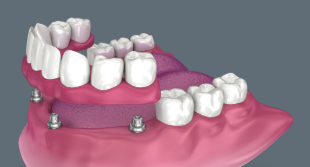
Some patients hope to reuse their existing dentures after receiving dental implants.
This may be possible in selected situations.
The dentist must evaluate whether the denture has an appropriate fit, adequate strength, suitable tooth positioning, and sufficient space for attachment components.
An existing denture may be modified to connect with newly placed implants when the clinical conditions allow.
However, an old or poorly fitting denture may require replacement.
Converting an unsuitable denture may compromise comfort, function, or maintenance.
The decision should be based on clinical suitability rather than simply reducing the initial cost.
How Much Does Implant Denture Treatment Cost in Pune?
The total cost depends on several factors.
These include:
- Number of dental implants required.
- Type and system of implants.
- Removable versus fixed restoration.
- Quality and quantity of available jawbone.
- Need for additional surgical procedures.
- Type of prosthetic material.
- Laboratory and digital planning requirements.
- Attachment components and maintenance needs.
- Complexity of the final restoration.
A removable implant overdenture may have a lower initial cost than a complex fixed full-arch restoration.
However, patients should consider both the initial investment and ongoing maintenance.
For example, removable attachment components may require replacement after repeated use.
Fixed restorations may need professional removal for maintenance, repair, or management of prosthetic complications.
The cost of Implant-Supported Teeth should therefore be discussed through an individualized treatment plan rather than a single advertised figure.
A complete estimate should explain what is included, whether additional procedures may be required, and what future maintenance could involve.
How Do You Clean and Maintain Implant Teeth?
Dental implants cannot develop dental caries like natural teeth, but the surrounding gums and bone can still develop inflammation or infection.
Poor plaque control can increase the risk of peri-implant disease.
Cleaning Removable Implant Overdentures
Patients should follow the dentist’s instructions for removing and cleaning the prosthesis.
Important steps may include:
- Removing the denture for cleaning.
- Cleaning the denture using suitable products.
- Carefully cleaning around implant attachments.
- Removing food debris and plaque.
- Avoiding inappropriate abrasive cleaners.
- Storing the denture according to professional advice.
- Checking attachments for wear or damage.
Cleaning Fixed Full-Arch Restorations
Fixed restorations require careful cleaning around the implants and beneath the replacement teeth.
Patients may need specialized brushes, interdental cleaning aids, floss threaders, or other recommended devices.
Professional maintenance is also important.
Why Regular Follow-Up Visits Matter
Implant-Supported Teeth require ongoing monitoring of implant health, gum inflammation, bite forces, prosthetic wear, and attachment stability.
The ideal review interval depends on the patient’s risk factors and treatment complexity.
Some patients may require more frequent professional maintenance than others.
Good daily oral hygiene and regular dental examinations are essential for long-term success.
What Are the Possible Risks and Limitations?
Dental implant rehabilitation has a strong clinical track record, but every treatment involves limitations and potential complications.
Surgical Risks
Possible complications include:
- Pain, swelling, or bleeding.
- Infection after surgery.
- Injury to nearby anatomical structures.
- Failure of an implant to integrate with bone.
- Need for additional surgical procedures.
Long-Term Biological Complications
Inflammation around implants may develop when plaque accumulates or other risk factors are present.
Peri-implantitis can cause inflammation and progressive supporting bone loss.
Prosthetic Complications
Patients may experience:
- Wear of attachment components.
- Loosening of prosthetic screws.
- Fracture or chipping of artificial teeth.
- Changes in denture fit.
- Difficulty cleaning certain areas.
- Need for prosthetic repair or replacement.
Implant-Supported Teeth are not guaranteed to last a lifetime without maintenance.
Their success depends on treatment planning, surgical and prosthetic execution, general health, oral hygiene, and regular professional care.
Frequently Asked Questions
1. Are Dental Implants Better Than Traditional Dentures?
Implants can provide improved retention and stability, particularly for patients who struggle with loose dentures.
However, conventional dentures remain a useful treatment option for many people. The best choice depends on the patient’s clinical needs and circumstances.
2. Can Older People Get Dental Implants?
Yes. Many older adults can receive implants after appropriate medical and dental evaluation.
Age alone is not an absolute contraindication.
3. Is Implant Surgery Painful?
Implant placement is generally carried out under local anaesthesia.
Postoperative soreness, swelling, or discomfort may occur and should be managed according to the dentist’s instructions.
4. Can I Eat Normally After Implant Treatment?
Many patients experience improved chewing ability after successful rehabilitation.
However, food restrictions may be necessary during healing, and very hard foods can damage prosthetic components.
5. How Long Do Implant-Retained Dentures Last?
Longevity varies.
The implants and the prosthesis are separate components, and their service lives may differ.
Even when implants remain healthy, prosthetic attachments, denture teeth, or other materials may require maintenance or replacement.
6. Can I Sleep with Implant-Retained Dentures?
Removable overdentures are generally taken out during sleep unless the treating dentist provides specific instructions otherwise.
Fixed full-arch restorations remain in the mouth.
7. Can Dental Implants Be Placed When Jawbone Is Very Thin?
Some patients with limited bone may still have implant treatment options.
These may involve changes in implant positioning, implant design, or bone augmentation.
The suitability of each option must be determined through clinical examination and appropriate imaging.
8. Do Implant Dentures Look Natural?
Careful prosthetic design can create natural-looking replacement teeth.
The final appearance depends on tooth positioning, colour, shape, gum contours, lip support, and facial proportions.
9. Do I Need Regular Dental Checkups After Implant Treatment?
Yes.
Implants, surrounding tissues, attachments, and prosthetic components require ongoing professional monitoring.
Implant-Supported Teeth should be maintained with the same seriousness as other long-term dental restorations.
Why Digital Dentistry Is Helpful in Implant Rehabilitation
Modern digital dentistry has significantly expanded the possibilities for diagnosis, treatment planning, and prosthetic design.
CBCT imaging can help dentists understand jawbone anatomy and evaluate important structures before surgery.
Digital dental impressions may improve the recording of oral structures and help with prosthetic workflows.
Three-dimensional planning tools can assist in evaluating proposed tooth positions and implant placement.
In suitable cases, digital workflows may also support the design and manufacture of provisional or final restorations.
However, advanced equipment does not replace clinical experience and judgment.
The most important factor remains a carefully planned treatment that considers the patient’s needs, oral health, anatomy, and ability to maintain the restoration.
Why Choose Joglekar’s Dental Solutions in Chinchwad for an Implant Consultation?
Patients with loose dentures often need more than a simple replacement.
They need a clear understanding of why their existing dentures are uncomfortable and which solutions may be suitable.
At Joglekar’s Dental Solutions in Chinchwad, Pune, we focus on examining the patient’s clinical condition and discussing appropriate restorative options.
Our dental technology includes:
- In-house CBCT imaging for appropriate three-dimensional diagnostic assessments.
- Intraoral digital scanning technology.
- Digital treatment planning workflows.
- Implant rehabilitation and restorative dental services.
- Evaluation of bite relationships and prosthetic requirements.
The objective is to develop a treatment plan that considers function, aesthetics, oral hygiene, long-term maintenance, and patient expectations.
Not every patient requires implants. Some may benefit from modifications to their existing dentures, while others may be suitable for an implant-retained overdenture or fixed full-arch restoration.
A personalized consultation helps determine the appropriate path.
When Should You Consult a Dentist About Loose Dentures?
You should arrange a dental examination if:
- Your denture frequently moves while eating or talking.
- You develop repeated sore spots or ulcers.
- Chewing has become difficult.
- You regularly need excessive denture adhesive.
- Your denture feels different from when it was first made.
- You avoid social situations because of denture instability.
- Your dentures are damaged, worn, or uncomfortable.
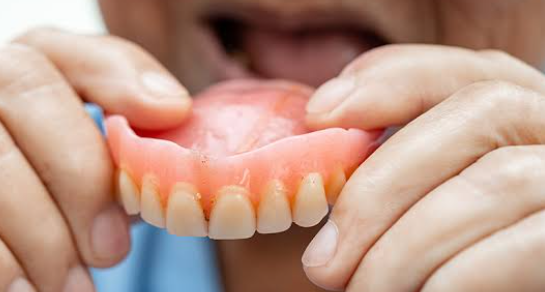
These symptoms do not automatically mean that implants are necessary.
They indicate that your current denture and supporting oral tissues should be evaluated.
Early assessment may help identify a simpler solution before discomfort becomes a persistent problem.
Replace Denture Frustration with Greater Confidence
Loose dentures can affect everyday comfort, nutrition, speech, and confidence.
Although conventional dentures remain a valuable solution for many patients, repeated movement and discomfort may indicate the need to explore other treatment options.
Implant-Supported Teeth can provide greater stability and improved function for appropriately selected patients.
Whether the solution is a removable implant overdenture or a fixed full-arch restoration, successful treatment requires accurate diagnosis, careful planning, appropriate surgical and prosthetic techniques, and ongoing maintenance.
The goal should not simply be replacement teeth that look attractive.
It should be a healthy, comfortable, functional, and maintainable restoration that supports the patient’s daily life.
If you are struggling with loose dentures, consider scheduling a professional dental consultation to understand your treatment options.
Visit Joglekar’s Dental Solutions in Chinchwad, Pune, to learn about suitable solutions for missing teeth and uncomfortable dentures.
Your smile deserves comfort, stability, and confidence.
Medical disclaimer: This article is intended for general patient education. It does not replace an individualized dental examination. Treatment suitability, risks, recovery, and outcomes vary between patients.