
Worried about delayed teeth in children? Learn the real causes, normal timelines, and when delayed eruption actually needs a dentist’s attention.
Every parent has a friend or relative whose child had a full set of teeth by their first birthday, which makes it especially stressful when your own child seems to be taking noticeably longer. Delayed teeth in children is one of the more common concerns brought up at pediatric checkups, and while it’s often completely harmless, understanding the real range of normal, and the genuine warning signs, makes a real difference in knowing when to simply wait and when to actually act.
This guide covers the honest truth about delayed teeth in children, what timelines are actually considered normal, the real causes behind delayed eruption, and exactly when it’s worth a dental evaluation rather than more waiting.
What Counts as “Delayed” Teeth, Exactly?
Baby Teeth Timeline
Most babies get their first tooth between 6 and 12 months, though anywhere up to 14-15 months is still generally considered within normal range. By around age 3, most children have all 20 baby teeth. Delayed teeth in children becomes a more relevant conversation if no teeth have appeared by around 18 months, since this starts falling meaningfully outside the typical range.
Permanent Teeth Timeline
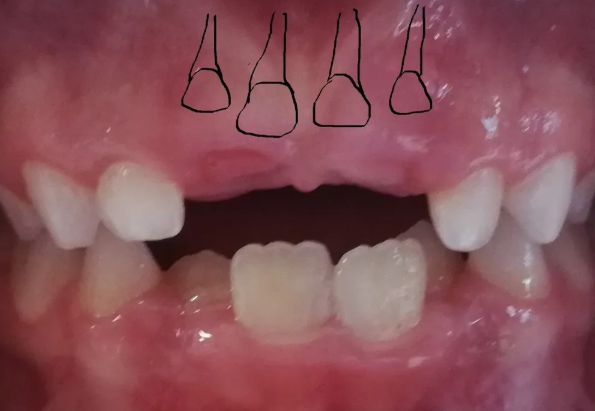
Permanent teeth usually begin replacing baby teeth around age 6, continuing in a fairly predictable sequence through the early teenage years. If a permanent tooth is significantly late compared to its counterpart on the opposite side of the mouth, generally more than 6 months to a year behind, that asymmetry is one of the clearer, more specific signs worth having evaluated.
Real Causes of Delayed Teeth in Children
1. Genetics and Family History
This is by far the most common explanation. If a parent had noticeably late teeth as a child themselves, there’s a strong chance their child will follow a similarly delayed timeline, without any underlying problem at all.
2. Premature Birth or Low Birth Weight
Babies born prematurely or at a low birth weight often show a corresponding delay in tooth eruption, generally proportional to how early or how small they were at birth, and this typically evens out over time without intervention.
3. Nutritional Deficiencies
Insufficient calcium, vitamin D, or overall nutrition during early development can meaningfully slow the eruption process. This is one of the more addressable causes, since correcting the underlying nutritional gap often allows eruption to catch up.
4. Hypothyroidism or Other Endocrine Conditions
Certain hormonal and metabolic conditions, hypothyroidism in particular, are well documented as a cause of significantly delayed teeth in children. This is one of the reasons a pediatrician’s involvement matters alongside a dentist’s, since the root cause may extend beyond dental health alone.
5. Extra or Overlying Gum Tissue
Sometimes a tooth is fully developed and ready to erupt, but a thicker-than-usual layer of gum tissue physically delays its emergence. This is a more mechanical, localized cause, often resolved with a simple, minor procedure once identified.
6. Impacted or Blocked Teeth
A tooth can become physically blocked by a neighboring tooth, extra tooth (supernumerary tooth), or insufficient space in the jaw, preventing normal eruption entirely. This cause is typically only confirmed through an X-ray, since it isn’t visible from the outside.
7. Early Loss of a Baby Tooth
If a baby tooth is lost too early, whether from trauma or decay, the surrounding teeth can sometimes shift into the empty space, blocking or delaying the eruption of the permanent tooth meant to take its place.
8. Systemic or Genetic Syndromes
In rarer cases, certain genetic syndromes are associated with more widespread and significant eruption delay, usually alongside other developmental signs that would already be under medical evaluation.
Is Delayed Eruption Usually Something to Worry About?
In the majority of cases, no. Delayed teeth in children is most commonly explained by simple genetics or normal individual variation, both of which resolve entirely on their own without treatment. The concern arises specifically when delay is significant relative to established timelines, asymmetrical between the same tooth on both sides of the mouth, or accompanied by other symptoms suggesting an underlying medical or mechanical cause.
When Should You Actually See a Dentist?
- No baby teeth have appeared by 18 months
- A permanent tooth is more than 6-12 months later than its matching tooth on the other side
- There’s visible swelling, pain, or an unusual bump where a tooth should be emerging
- Your child has other developmental delays alongside dental ones
- A sibling tooth erupted normally but this specific one seems unusually stuck or slow
- Your pediatrician has flagged a broader growth or hormonal concern
In any of these situations, a dental evaluation, often including an X-ray, can clarify whether the cause is simple genetics, a mechanical blockage, or something requiring a referral for further medical evaluation.
How Is the Cause of Delayed Teeth in Children Diagnosed?
Clinical Examination
A dentist first checks the gum tissue, jaw development, and overall oral health for any obvious mechanical cause, like overlying tissue or visible crowding.
X-Ray or CBCT Imaging
Imaging reveals whether the tooth is present and developing normally beneath the surface, whether it’s impacted or blocked, and whether there are any extra or missing teeth affecting the eruption pattern, information that simply isn’t visible through a clinical exam alone.
Medical History Review
Details about birth weight, prematurity, family eruption patterns, and any known medical conditions all help distinguish between a harmless developmental variation and a cause that may need broader medical attention.
What Treatment Options Exist?
Watchful Waiting
For the majority of cases involving mild delay with no other symptoms, simply monitoring at routine checkups is entirely appropriate, since most delayed teeth in children eventually erupt normally without any intervention at all.
Minor Gum Procedures
If overlying gum tissue is the specific cause, a simple, minor procedure to expose the tooth can allow normal eruption to proceed.
Space Maintainers
If early loss of a baby tooth is contributing to blockage, a space maintainer can hold the necessary space open until the permanent tooth is ready to erupt properly.
Orthodontic Guidance
For impacted teeth or significant crowding-related delay, an orthodontist may need to create space or guide the tooth into position using a small, targeted appliance.
Referral for Underlying Conditions
If a hormonal or systemic cause is suspected, coordination with a pediatrician or specialist addresses the root cause, which often allows normal eruption to resume once treated.
Frequently Asked Questions
Is it normal for one twin to get teeth much earlier than the other? Yes, this is fairly common and usually reflects simple individual variation rather than anything concerning, even between genetically identical twins.
Can delayed teeth in children catch up completely on their own? Very often, yes, particularly when the cause is genetic or related to mild prematurity. Many children with a delayed start end up with a completely normal full set of teeth by the expected age range regardless.
Does delayed teething affect a baby’s overall development? Not directly in most cases. Tooth eruption timing on its own is rarely linked to broader developmental concerns unless it’s occurring alongside other specific delays your pediatrician would already be monitoring.
Should I be worried if my child’s baby teeth were late but permanent teeth are on time? Not necessarily. Baby tooth timing and permanent tooth timing don’t always correlate perfectly, and a late start with baby teeth doesn’t automatically predict a late permanent tooth timeline.
What’s the very latest age considered normal before I should be concerned? As a general guideline, no teeth by 18 months, or a specific permanent tooth more than a year behind its counterpart, are the two most common thresholds dentists use to recommend a proper evaluation.
The honest truth about delayed teeth in children is that most cases are simply genetic, normal variation with nothing concerning behind them at all. Still, understanding the real causes, from nutrition and prematurity to mechanical blockages and rarer hormonal conditions, helps you recognize the specific situations that genuinely warrant an evaluation rather than more waiting. When in doubt, a quick dental check with imaging if needed is the clearest way to separate ordinary variation from something worth addressing early.
At Joglekar’s Dental Solutions, pediatric evaluations for delayed teeth in children include clinical examination and imaging when needed, helping parents understand exactly what’s happening and whether watchful waiting or active treatment is the right next step.