
Cracked tooth syndrome can cause unpredictable pain that’s hard to pinpoint. Learn the warning signs, causes, and treatment options before damage spreads.
Of all the dental problems patients bring to a clinic, cracked tooth syndrome is one of the most frustrating — for both patient and dentist. The pain is often sharp but brief, triggered unpredictably by chewing or temperature, and disappears just as quickly as it came. Many patients visit multiple times before the exact tooth is even identified, simply because cracked tooth syndrome doesn’t always show up clearly on an X-ray the way a cavity does.
This unpredictability is exactly why cracked tooth syndrome deserves more attention than it usually gets. Left undiagnosed, a crack can quietly extend deeper into the tooth over months or years, eventually threatening the nerve, the root, or the survival of the tooth itself. Caught early, the same tooth can often be treated and kept functioning comfortably for years.
What Is Cracked Tooth Syndrome?
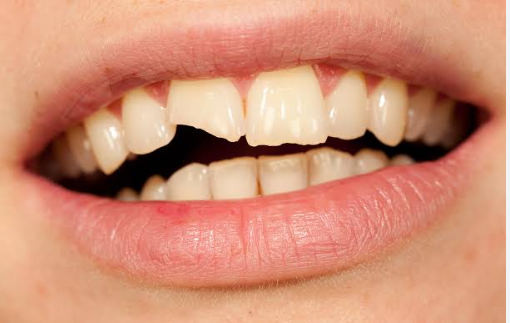
Cracked tooth syndrome refers to a tooth that has developed an incomplete fracture, one that isn’t always visible to the eye or easy to detect on a standard X-ray, but is deep enough to cause pain when biting pressure or temperature reaches the inner layers of the tooth.
Unlike a broken or chipped tooth, where a visible piece is clearly missing, cracked tooth syndrome often starts as a fine line running through the enamel and into the dentin, sometimes extending down toward the pulp or root. Because the crack can open and close slightly under pressure, irritating the nerve inside, the pain pattern is often described as sharp, momentary, and difficult to reproduce consistently — which is precisely what makes cracked tooth syndrome so easy to miss in its early stages.
Why Cracked Tooth Syndrome Is So Hard to Diagnose
Several factors make this one of the trickier diagnoses in dentistry:
- The crack is often microscopic at first, invisible to the naked eye and frequently invisible on a standard 2D X-ray, since X-rays capture density changes, not fine fracture lines running parallel to the beam
- Pain is inconsistent — it may only appear when releasing bite pressure, only with cold, or only when chewing on one specific side, making the trigger hard to reproduce during a routine exam
- Multiple teeth can seem responsible — patients often struggle to identify exactly which tooth hurts, since the referred pain pattern can feel like it’s coming from a neighboring tooth entirely
- Symptoms come and go over weeks or months, sometimes disappearing for a while and creating false reassurance that nothing is actually wrong
This is exactly why proper diagnosis of cracked tooth syndrome typically requires more than a routine glance — it often involves bite testing, transillumination (shining a strong light through the tooth to reveal the crack line), staining dyes, and sometimes CBCT imaging when a standard X-ray isn’t conclusive.
Common Causes of Cracked Tooth Syndrome
Chewing on Hard Objects
Ice, unpopped popcorn kernels, hard candy, and pens are some of the most common everyday culprits behind cracked tooth syndrome. A single bite on an unexpectedly hard object can be enough to start a fracture that then worsens gradually over time.
Teeth Grinding and Clenching
Chronic grinding or clenching, especially at night, subjects teeth to repetitive stress far beyond normal chewing forces. Over months and years, this repeated pressure is one of the leading contributors to cracked tooth syndrome, particularly in molars.
Large Fillings
Teeth with large, old fillings have less of their original structure remaining, which makes the tooth structurally weaker and more prone to developing a crack under normal biting forces — even forces that a healthy, unrestored tooth would handle without issue.
Age-Related Wear
Cracked tooth syndrome becomes noticeably more common with age, as enamel gradually experiences decades of accumulated micro-stress from biting, temperature changes, and general wear.
Trauma
A direct blow to the mouth, even one that doesn’t cause an obvious chip, can initiate a crack that only becomes symptomatic much later.
Warning Signs of Cracked Tooth Syndrome
Cracked tooth syndrome often presents through a fairly recognizable pattern, even though the exact tooth can be hard to pinpoint:
- Sharp, brief pain when biting down on certain foods, especially when releasing the bite
- Pain triggered by cold or hot temperatures that fades quickly rather than lingering
- Discomfort that seems to move around or feels hard to localize to one specific tooth
- Pain that comes and goes over weeks, rather than being constant
- Mild sensitivity when chewing on one particular side of the mouth
- In more advanced cases, visible swelling or tenderness in the gum near a specific tooth
Any one of these on its own might seem minor. Together, especially with the classic “pain on release of bite pressure” pattern, they’re a strong signal that cracked tooth syndrome, rather than a simple cavity, may be the underlying cause.
What Happens If Cracked Tooth Syndrome Is Left Untreated?
This is the part patients are often not told clearly enough. A crack that seems minor today doesn’t stay static — it tends to progress, and the direction it progresses in matters enormously for treatment options:
- The crack can extend toward the pulp, eventually exposing the nerve and causing the kind of persistent, severe pain that requires root canal treatment
- Bacteria can enter through the crack line, leading to infection deep inside the tooth that wouldn’t otherwise have been at risk
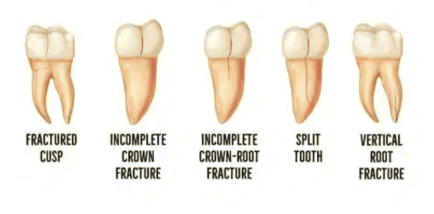
- The crack can extend below the gumline or into the root, which significantly worsens the prognosis and can make a tooth unsalvageable
- Delayed treatment reduces the range of options available — a crack caught early might need only a protective crown, while the same crack left untreated for a year might require root canal treatment, or in severe cases, extraction
How Is Cracked Tooth Syndrome Treated?
Treatment depends entirely on how deep the crack runs and whether it has already reached the pulp or root:
Bonding or a Filling
For very minor, shallow cracks that haven’t reached the pulp, a simple bonding procedure can sometimes stabilize the tooth and relieve symptoms.
A Protective Crown
This is the most common treatment for cracked tooth syndrome. A crown covers and protects the entire tooth, holding the cracked segments together under the pressure of a full bite and preventing the crack from progressing further.
Root Canal Treatment
If the crack has extended into the pulp and the nerve is already irritated or infected, root canal treatment is usually necessary to remove the affected tissue, followed by a crown to protect the remaining structure.
Extraction
In cases where the crack extends deep into the root, or has split the tooth vertically, saving the tooth may no longer be realistic, and extraction followed by an implant or bridge becomes the more predictable option.
The earlier cracked tooth syndrome is caught, the more likely treatment stays in the simpler, more conservative categories rather than progressing toward root canal treatment or extraction.
Can Cracked Tooth Syndrome Be Prevented?
Cracks aren’t entirely avoidable, but several habits meaningfully lower the risk:
- Avoid chewing on ice, hard candy, unpopped popcorn kernels, or pens
- If you grind or clench your teeth, especially at night, ask your dentist about a nightguard
- Wear a mouthguard during contact sports
- Address large, old fillings before they weaken the tooth further, rather than waiting for symptoms
- Don’t ignore intermittent, unexplained tooth pain — early evaluation is far easier to treat than a fully developed crack
Frequently Asked Questions
Can a cracked tooth heal on its own? No. Unlike bone, a cracked tooth cannot heal or repair itself. Without treatment, the crack typically progresses over time rather than resolving.
Will a cracked tooth show up on a regular X-ray? Not always. Because X-rays are most sensitive to changes running perpendicular to the beam, a vertical crack running parallel to it can easily be missed. This is why clinical tests like biting pressure, transillumination, and sometimes CBCT imaging are often needed alongside X-rays.
How do I know if my tooth pain is from a crack or a cavity? Cavity pain tends to be more constant and linked to sweet or cold exposure. Cracked tooth syndrome typically causes sharp, brief pain specifically triggered by biting pressure, especially on releasing the bite, which is a fairly distinctive pattern.
Is a crown always necessary for a cracked tooth? Not always, but it’s the most common treatment because it protects the tooth from the biting forces that would otherwise cause the crack to worsen. Very minor, shallow cracks may sometimes be managed with bonding alone.
Can a cracked tooth get infected? Yes. If the crack reaches deep enough to expose the pulp, bacteria can enter and cause infection, which is one of the main reasons early diagnosis and treatment matter so much.
Cracked tooth syndrome is one of those conditions where timing genuinely changes the outcome. A crack caught early, while it’s still shallow and hasn’t reached the nerve, can often be managed with a straightforward crown. The same crack left unaddressed for months can progress into root canal territory, or worse, become unsalvageable altogether.
If you’re experiencing unpredictable, sharp pain when chewing, especially pain that’s hard to pinpoint to one specific tooth, it’s worth getting evaluated rather than waiting for the pain to become constant.