
Are dental x-rays safe during pregnancy or with frequent use? Learn the real radiation facts, safety measures, and when imaging is truly necessary.
Almost every patient has the same quiet worry the moment a dentist mentions an X-ray: are dental x-rays safe, really? It’s a completely reasonable question, especially for anyone who’s had several sets of X-rays over the years, is currently pregnant, or is simply cautious about unnecessary radiation exposure of any kind.
The honest answer is more reassuring than most patients expect, but it deserves a real explanation rather than a quick “don’t worry about it.” This article breaks down exactly how much radiation dental X-rays involve, what the actual risks are, how pregnancy changes the picture, and what modern digital and CBCT imaging have changed about the conversation entirely.
So, Are Dental X-Rays Safe? The Short Answer
Yes, dental x-rays are safe for the overwhelming majority of patients, including most pregnant patients when proper precautions are followed. The radiation dose involved in routine dental imaging is remarkably small, especially compared to radiation exposure most people encounter in everyday life without a second thought.
But “safe” doesn’t mean “unlimited” or “unnecessary is fine too.” The real answer to are dental x-rays safe depends on using the right amount, for the right reason, with proper protective measures, rather than avoiding imaging altogether or getting it without genuine clinical need.
How Much Radiation Is Actually Involved?
To answer are dental x-rays safe in a meaningful way, it helps to compare the numbers rather than just take it on faith:
- A single dental bitewing X-ray delivers roughly 0.005 millisieverts (mSv) of radiation
- A full mouth series of X-rays totals around 0.150 mSv
- A CBCT (3D dental scan) typically ranges from 0.030 to 0.100 mSv depending on the field size
- For comparison, natural background radiation from simply living on Earth adds up to about 3 mSv per year, roughly 8 microsieverts per day, just from the sun, soil, and air
- A round-trip transatlantic flight exposes passengers to about 0.1 mSv from cosmic radiation at altitude, similar to or more than a full mouth dental X-ray series
Put simply, a routine dental X-ray exposes you to less radiation than a single day of ordinary background exposure. This context is exactly why dental professionals consider the radiation risk from routine imaging to be genuinely minimal.
Why Digital X-Rays Have Changed the Conversation
If you’ve had dental X-rays taken years apart, you might notice modern digital sensors feel faster and involve less waiting compared to the older film-based systems. That’s not just convenience, it’s a real safety improvement.
Digital X-rays reduce radiation exposure by approximately 60-80% compared to traditional film X-rays, since digital sensors are more sensitive and require far less radiation to produce a clear, usable image. This is one of the biggest reasons the honest answer to are dental x-rays safe has become even more reassuring over the last decade, the technology itself has substantially reduced the dose involved.
Are Dental X-Rays Safe During Pregnancy?
This is where the question of are dental x-rays safe gets asked most urgently, and understandably so. Here’s what’s actually true:
Dental X-rays are generally considered safe during pregnancy, particularly with the protective measures used in modern practice. The American College of Obstetricians and Gynecologists has stated that the level of radiation from dental X-rays is too low to cause harm to a developing baby, and untreated dental infections during pregnancy carry their own real risks that shouldn’t be ignored out of X-ray anxiety.
That said, a few sensible precautions are standard practice:
- A lead abdominal apron shields the abdomen and developing baby from any scatter radiation
- A thyroid collar protects the thyroid gland, which is more sensitive to radiation exposure
- X-rays are typically limited to what’s clinically necessary during pregnancy, postponing purely elective imaging until after delivery when reasonable
- Digital X-rays are used whenever possible, given their significantly lower dose
If a genuine dental problem, like an infection, a suspected abscess, or significant pain, requires diagnosis during pregnancy, the properly shielded X-ray needed to diagnose and treat it is considered far safer than leaving a real infection untreated.
Is It Safe to Get Dental X-Rays Frequently?
This is the second half of the question patients often have: are dental x-rays safe if you need them often, not just occasionally?
The honest answer depends on the reason behind the frequency:
Routine check-up X-rays are typically recommended every 6 months to 2 years depending on your individual cavity risk, gum health, and history. This spacing is deliberately calculated to balance diagnostic value against cumulative exposure, and following this guidance keeps lifetime dose well within safe limits.
Treatment-related X-rays, such as those taken during a root canal or implant placement, involve a higher short-term frequency but serve a direct, immediate clinical purpose, confirming canal length, checking healing, or verifying implant positioning. These aren’t optional extras, they directly affect the accuracy and safety of the treatment itself.
Unnecessary repeat X-rays, on the other hand, without a clear clinical reason, are worth questioning. A good dentist should always be able to explain specifically why a new X-ray is needed rather than taking one purely out of routine.
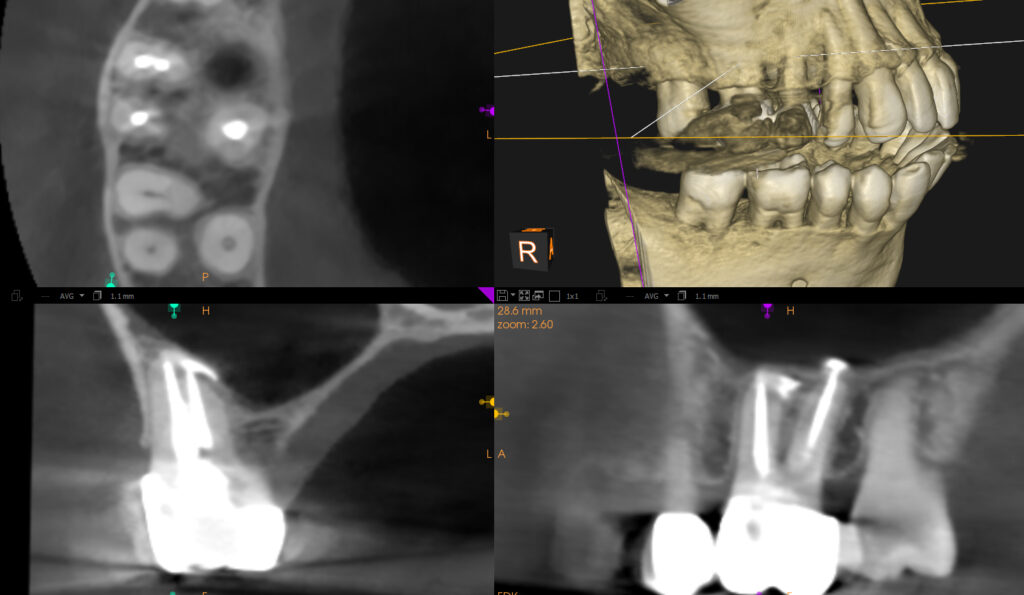
What About CBCT (3D) Scans Specifically?
CBCT imaging involves a higher dose than a standard 2D X-ray, but it’s still low compared to many other medical imaging types, and considerably lower than a full medical CT scan. A dental CBCT typically delivers a fraction of the radiation of a medical CT of the head or jaw, because dental CBCT machines are specifically designed with a smaller field of view and lower dose settings for exactly this kind of targeted imaging.
CBCT is generally reserved for cases where 2D X-rays genuinely aren’t enough, complex implant planning, evaluating impacted teeth, or assessing nerve proximity, rather than being used routinely for every patient.
Who Should Be Extra Cautious?
While are dental x-rays safe is a reassuring “yes” for most people, a few groups warrant extra conversation with their dentist:
- Pregnant patients, particularly in the first trimester, where elective imaging is often postponed if not clinically urgent
- Children, whose growing tissue is somewhat more radiosensitive, which is why pediatric dental X-ray protocols use reduced exposure settings and stricter shielding
- Patients who’ve had significant recent medical imaging, such as multiple CT scans, where cumulative dose across all sources is worth discussing openly with both their doctor and dentist
Why Skipping Necessary X-Rays Can Be Riskier Than Taking Them
It’s worth stating plainly: avoiding X-rays out of radiation anxiety can create a bigger problem than the imaging itself. Many dental issues, cavities between teeth, infections at the root tip, bone loss from gum disease, are invisible to the naked eye and can only be properly diagnosed with an X-ray. Delaying diagnosis because of an overstated fear of radiation risk often means a small, easily treated problem is caught later, once it’s larger and more complicated to fix.
The real safety question isn’t just are dental x-rays safe, it’s also what happens if a genuine problem goes undetected because an X-ray was skipped.
Frequently Asked Questions
Are dental x-rays safe for children? Yes, with appropriately reduced exposure settings and proper shielding, which most modern dental practices use as standard protocol for pediatric patients.
Can I request to skip an X-ray if I’m worried about radiation? You can always discuss your concerns with your dentist, but understand that some diagnoses genuinely can’t be made without imaging. A good dentist will explain exactly why a specific X-ray is being recommended rather than taking one automatically.
Is a CBCT scan safe to have once a year? CBCT is typically not recommended annually unless there’s an ongoing clinical need, such as complex implant or endodontic treatment planning. Routine yearly CBCT for general checkups isn’t standard practice.
Do dental x-rays affect fertility? No. The radiation dose from dental X-rays is far too localized and low to have any measurable effect on reproductive organs, particularly with proper shielding in place.
How long does radiation from a dental x-ray stay in the body? None at all. Dental X-rays use ionizing radiation that passes through the body during the brief exposure and does not remain or accumulate afterward, unlike radioactive materials used in some other medical procedures.
So, are dental x-rays safe? For the vast majority of patients, including most pregnant patients with proper shielding, the answer is a well-supported yes. The radiation dose involved is small, modern digital and CBCT technology has reduced it even further, and the diagnostic value of catching problems early consistently outweighs the minimal risk involved.
The more useful question isn’t whether X-rays are safe in general, it’s whether a specific X-ray is clinically necessary in your specific case, which is exactly the conversation worth having directly with your dentist before any imaging is taken. Take a look at our testimonials and consultation page for further understanding.