
Dental Implants vs Dentures: Discover 8 powerful differences in comfort, chewing, cost, and care to choose the right tooth replacement in Chinchwad, Pune.
Losing one tooth can affect your confidence. Losing several teeth can change how you eat, speak, smile, and interact with people. If you have been using a removable denture, you may already know the frustration of food getting underneath it or feeling uncertain when you laugh. If you have recently had teeth extracted, you may be wondering whether to replace them with dentures or choose something more secure.
When patients search for Dental Implants vs Dentures, they often expect one clear winner. The more useful answer is that each option has strengths, limitations, and costs. A well-made removable denture may be exactly right for one patient, while implant-supported teeth may be a better long-term investment for another. There is also an important middle option: a removable denture that attaches to dental implants for improved stability.
The right decision depends on how many teeth are missing, the condition of your jawbone and gums, your health, your budget, your expectations, and your willingness to maintain the replacement teeth. This detailed guide explains eight major differences, the treatment process, common myths, practical costs, and questions worth asking before you decide.
First, understand your tooth replacement options
The comparison of Dental Implants vs Dentures becomes much easier once you realise these are not simply two versions of the same treatment. There are several different designs, and patients sometimes use the word “implant” to describe the entire artificial tooth when it actually refers to its support in the bone.
What is a dental implant?
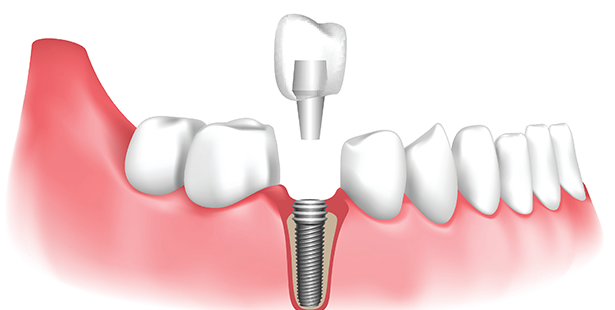
A dental implant is a small, specially designed fixture placed in the jawbone to support a replacement tooth or teeth. After appropriate healing, the implant can carry a single crown, a bridge, or a larger prosthesis. A typical single-tooth implant restoration includes the fixture inside the bone, an abutment or connecting component, and the visible crown.
For someone missing one tooth, an implant-supported crown may replace it without using the neighbouring teeth as supports. If several teeth are missing, carefully planned implants can support a bridge. For patients missing most or all teeth, implants can support a fixed full-arch set of teeth or retain a removable overdenture.
Implants require assessment and a surgical procedure. They also need sufficient bone support, healthy surrounding tissues, good cleaning, and ongoing reviews. They are not maintenance-free or guaranteed to last for life.
What is a conventional denture?
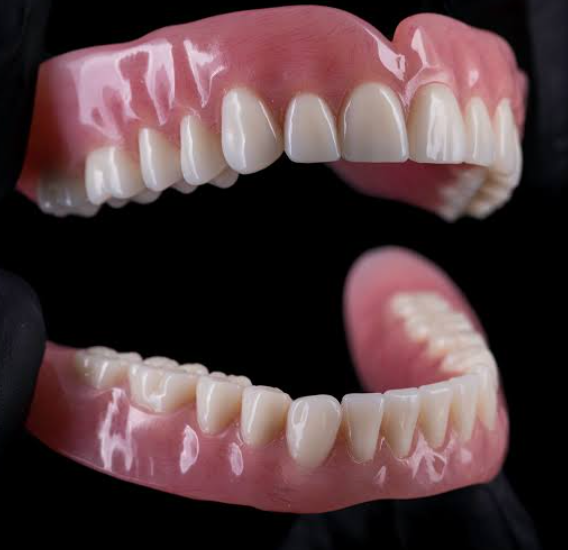
A conventional denture is a removable appliance designed to replace some or all missing teeth and, often, some of the missing gum contour. Complete dentures replace all teeth in an upper or lower arch. Partial dentures replace several missing teeth while some natural teeth remain.
A complete upper denture often gains retention from its close fit and border seal. A conventional lower denture is generally more difficult to stabilize because the tongue, cheeks, and movements of the floor of the mouth limit the supporting area. Individual results vary depending on jaw anatomy, saliva, bite, and denture design.
Dentures can improve appearance, speech, and chewing and may be particularly suitable when surgery is not preferred or appropriate. They can also restore facial and lip support when substantial gum and bone tissue has been lost.
What is an implant-supported overdenture?
A removable implant overdenture looks somewhat like a conventional denture but connects to implants through attachments. It can be removed by the patient for daily cleaning, yet it may feel substantially more secure while eating and speaking.
For a completely toothless lower jaw, a two-implant overdenture is a well-established option for many suitable patients. Upper-jaw overdentures often need a different implant configuration, commonly involving more implants, depending on bone quality and prosthetic design. There is no universal implant number suitable for everyone.
What is a fixed full-arch implant restoration?
A fixed full-arch restoration is attached to multiple implants and is not removed by the patient each night. You may hear advertising terms such as “fixed teeth,” “full-mouth implants,” or “All-on-4.” These terms refer to particular treatment concepts, not a promise that every patient can receive a final set of permanent teeth on the same day.
The number and position of implants, restorative materials, prosthetic design, and loading time must be chosen for the individual case. Fixed full-arch teeth can deliver excellent stability, but they also involve more complex treatment, a higher financial commitment, and careful cleaning underneath the bridge.
Dental Implants vs Dentures: a quick comparison
| Important factor | Conventional removable dentures | Implant-supported replacement teeth |
|---|---|---|
| How they stay in place | Fit over gums; some designs use clasps or adhesives | Anchored or retained by implants in the jawbone |
| Stability | Can be good, but movement is possible, especially in the lower jaw | Often more stable, particularly during chewing |
| Surgery | Usually no implant surgery | Implant placement requires a surgical procedure |
| Initial cost | Generally lower | Generally higher, especially for full-arch fixed work |
| Treatment time | Often shorter, though healing and adjustments can add time | May require several stages and months of healing |
| Bone changes | Do not directly support the jawbone like an implant | Can help maintain bone around integrated implants; do not stop all bone loss |
| Daily care | Remove, clean, and usually keep out overnight | Clean around implants; remove overdentures, but not fixed bridges, as directed |
| Long-term expenses | Relining, repair, replacement, and review | Professional maintenance, attachment or prosthetic repairs, and possible component replacement |
This table offers a starting point, not a substitute for examination. The next eight sections explain why the differences matter in everyday life.
1. Stability and confidence: will your teeth move while talking?
In the discussion of Dental Implants vs Dentures, stability is often the first concern patients mention. Imagine going to a family function and worrying that your lower denture might move while you speak or laugh. Even if it has never actually fallen out, the possibility can affect how freely you socialise.
Conventional dentures rest on the soft tissues and underlying ridges. A well-designed denture can work very well, especially when the anatomy is favourable. But changes in the jaw ridge, saliva, muscle control, and bite can affect its fit over time. A lower complete denture can be particularly challenging because of the tongue and limited supporting surface.
Implant-supported teeth gain retention from implants integrated with the bone. A fixed bridge does not move like a removable denture. An overdenture still comes out for cleaning, but its attachment system can offer a more secure fit during daily use.
Stability is not just a cosmetic matter. It may reduce anxiety around speech, meals, and social situations. However, some patients adapt extremely well to conventional dentures, and an implant restoration that has been poorly designed or is difficult to clean can create its own problems.
Practical takeaway: If denture movement is your main complaint, ask whether a more accurately fitted denture, a reline, or an implant-retained overdenture could solve the problem before assuming you need a costly fixed full-arch bridge.
2. Chewing food: what can you comfortably eat?
People asking about Dental Implants vs Dentures often mean something much more personal: “Can I eat an apple, roasted peanuts, or chapati comfortably again?” Tooth replacement should help you enjoy a wider range of foods, but the outcome depends on the design of the restoration, muscle control, bite, and other oral conditions.
Chewing with conventional dentures
New denture wearers often begin with soft foods, cut food into smaller pieces, and practise chewing evenly on both sides. As they adapt, many people eat a varied diet successfully. Still, very sticky or hard foods may dislodge a denture or create painful pressure spots, particularly if it is loose or the underlying ridge is thin.
A well-made, stable denture can be effective, but it does not exactly reproduce the force or sensory feedback of natural teeth. If you are struggling, a review of fit and bite may be more useful than simply applying extra adhesive.
Chewing with implant-supported teeth
Implant-supported restorations generally offer greater stability and can improve chewing ability, especially for patients previously wearing unstable complete lower dentures. Research and international implant consensus statements support patient-reported improvements after moving from conventional complete dentures to implant overdentures or fixed implant restorations.
That does not mean you can immediately chew anything after surgery. Newly placed implants may need a protected healing period. Even after the final teeth are fitted, biting very hard objects, grinding your teeth, or placing excessive force on prosthetic materials can cause wear, fractures, or other complications.
Practical takeaway: Discuss the foods you currently avoid. Your dentist should consider your real eating habits, not only how the replacement teeth look in a photograph.
3. Appearance and smile confidence: which looks more natural?
When assessing Dental Implants vs Dentures, many people focus on whether artificial teeth will look natural. Both approaches can produce attractive smiles when tooth shape, position, colour, gum support, and facial proportions are planned well.
What dentures can do beautifully
A full denture can replace both teeth and the missing pink tissue contour. This can be an advantage for patients who have experienced considerable gum and bone loss. Denture flanges may provide support for the lips and cheeks, helping restore facial proportions. The denture teeth can be arranged to complement the person’s smile, age, and appearance.
However, when retention is poor, a denture may shift during laughter or speaking. Some upper dentures cover part of the palate, which certain patients find bulky or uncomfortable. Adjustments to shape and thickness can improve tolerance, although the anatomy and design place limits on what is possible.
What implants can do beautifully
An implant-supported crown or bridge can emerge from the gum in a way that closely resembles natural teeth, especially when the tissues and bone are favourable. Fixed full-arch teeth may also give patients the reassurance of not removing their teeth at night.
Here is an important detail: implants do not automatically guarantee a more natural smile. When substantial bone and gum tissue are missing, the restoration may need an artificial gum component. The position of the smile line and the amount of lip support needed will influence whether a fixed or removable design gives a better result.
Digital photographs, intraoral scanning, and a smile preview can help visualise treatment goals, but the final appearance always depends on individual anatomy and treatment limitations.
Practical takeaway: Ask to see a proposed tooth arrangement and discuss lip support, not just tooth whiteness. A smile should look appropriate for your face and remain easy to clean.
4. Jawbone health: what happens after teeth are lost?
A major difference in Dental Implants vs Dentures relates to the jawbone. When a tooth is removed, the bone that once surrounded and supported its root typically changes in shape and volume. This natural remodelling may continue over time and can affect how well dentures fit.
A conventional removable denture rests on the existing ridge but does not replace the root or provide the same direct stimulation to the surrounding bone as an integrated implant. As ridge shape changes, the denture may need relining, adjustment, or replacement. Some people experience significant long-term flattening of the lower jaw ridge, while others retain more favourable anatomy.
An implant transfers chewing forces to the surrounding bone through its integrated surface. It can help preserve bone locally around the implant under suitable conditions, but it does not prevent all jawbone resorption, restore every part of previously lost bone, or guarantee that tissue levels remain unchanged forever.
Implant patients may still experience bone loss from inflammation around implants, overload-related prosthetic problems, or other causes. Plaque control and professional monitoring are important.
What if you have already lost a lot of bone?
Low bone volume does not automatically rule out implants. Additional imaging and a careful assessment may identify suitable options, which sometimes include bone augmentation or an alternative implant position or design. These procedures increase complexity and may increase cost and healing time. In other cases, a conventional or implant-retained removable prosthesis may be a more sensible option.
Practical takeaway: Bone matters, but it is one part of the decision. The best result comes from matching the restoration to the actual jaw anatomy rather than promising a one-size-fits-all solution.
5. Surgery, discomfort, and recovery: what should you expect?
One reason the question Dental Implants vs Dentures is difficult is that the treatment experiences are very different. A conventional denture usually avoids implant surgery, while implant-supported treatment requires placement of fixtures into bone.
The denture process
The dentist examines the mouth, records impressions or digital scans where suitable, measures the jaw relationship, evaluates the bite, and arranges try-ins before the final denture is delivered. More than one appointment is often needed. After delivery, adjustments may be necessary to resolve sore spots or improve the fit.
If teeth have recently been extracted, the gums and bone change while healing. An immediate denture can sometimes be provided at the time of extraction, but it often needs early modifications or later replacement once tissues settle.
The implant process
Implant treatment begins with a medical and dental assessment and appropriate imaging. Surgery is commonly performed using local anaesthesia, with additional methods of anxiety management available where appropriate. Some swelling, soreness, or bruising can occur afterward, but recovery varies with the number of implants and the complexity of treatment.
The implants generally need time to integrate with bone before receiving their definitive restoration. A healing period of several months is common, and additional procedures can extend the overall timeline. Selected patients may receive temporary teeth immediately, but this depends on primary stability, bone conditions, bite forces, and the treatment plan. Same-day temporary teeth are not the same as a guaranteed final restoration that is ready for unrestricted chewing.
If you fear dental surgery
Tell the dentist which part worries you: the injection, pain afterward, medical safety, expense, or time away from work. A frank discussion often clarifies whether implant treatment is acceptable to you. Choosing a well-made denture is a legitimate decision, not a failure to choose the more advanced procedure.
Practical takeaway: Ask for the sequence of appointments, expected healing time, temporary tooth options, and what happens if additional bone treatment is required.
6. Daily cleaning and long-term maintenance: which is easier?
The everyday routine can change the answer to Dental Implants vs Dentures. Some patients are happy to remove and clean their dentures each night. Others strongly prefer fixed teeth but may underestimate the effort required to clean around implants and beneath bridges.
Caring for a conventional denture
Remove the denture daily and clean it using an appropriate denture brush and cleanser. Follow your dentist’s advice for overnight removal and storage. Clean the gums, tongue, palate, and any remaining natural teeth too. Avoid abrasive cleaning methods and very hot water, which may damage some materials.
A denture that becomes loose, develops a sharp edge, causes persistent soreness, or makes chewing difficult needs professional review. Do not attempt a home reline or major adjustment yourself.
Caring for a fixed implant bridge
A fixed implant bridge stays in the mouth, but the area beneath it and around the implants must be cleaned every day. Depending on the design, your dental team may advise special floss, interdental brushes, or other cleaning aids. Routine professional examinations and maintenance are necessary to assess tissue health, prosthetic components, and bite.
Implants can develop inflammation in the surrounding tissues, including peri-implant mucositis and peri-implantitis. These conditions are not prevented merely because the artificial teeth do not develop cavities. Gum bleeding, swelling, unpleasant taste, pus, looseness, or increasing difficulty cleaning deserve prompt attention.
Caring for an implant overdenture
An overdenture is removed for cleaning, like a regular denture, but also requires cleaning around the implant attachments. Retention inserts or other attachment parts may wear and need replacement. The benefit is that you can combine improved retention with access to a removable prosthesis for daily hygiene.
Practical takeaway: Ask your dentist to demonstrate exactly how you will clean the proposed restoration. If you cannot comfortably manage that routine, a different prosthetic design may be better.
7. Cost and lifetime value: what are you really paying for?
For many families, Dental Implants vs Dentures ultimately becomes a question about money. Conventional dentures usually require a smaller initial investment. Implant-supported restorations cost more because they involve surgical planning, implant fixtures, components, laboratory work, and follow-up care. The difference can be substantial when an entire arch is being restored.
But comparing only the first bill misses important long-term costs. Dentures may require periodic relining, repairs, and eventual replacement as the mouth changes. Implant restorations require professional maintenance and may also need replacement of worn components, fractured prosthetic teeth, retention inserts, or, sometimes, the prosthesis itself. There can be surgical complications or implant failures requiring further treatment.
What should an itemised estimate include?
Ask whether the quotation covers the initial consultation, radiographs and CBCT when indicated, any extractions, bone grafting if needed, the number and brand of implants, abutments, temporary restorations, final crowns or bridges, denture materials, attachment components, follow-up appointments, and maintenance.
A low advertised “implant price” may refer only to the fixture, without the connecting part and final tooth. Similarly, two dentures with different materials, design, and laboratory procedures may not be directly comparable.
How to compare alternatives fairly
Request an estimate for at least two clinically suitable plans. For example, if you are missing every lower tooth, you may be able to compare a well-made conventional complete denture with an implant-retained overdenture and, where appropriate, a fixed implant-supported bridge.
Ask not only “What is the cheapest?” but also “What will I spend to maintain this over five or ten years, and what can realistically happen if something breaks?” The answer cannot be reduced to one universal figure because people differ in anatomy, health, and treatment needs.
Practical takeaway: Choose based on total value, comfort, function, and maintainability, not on a headline price or a promise that the treatment will never require repair.
8. Suitability, age, and medical history: who can safely choose each option?
The final key difference in Dental Implants vs Dentures is suitability. Being older does not automatically make someone unsuitable for implants, and being young does not guarantee that implants are the best choice. Health, bone and gum conditions, medications, smoking, ability to clean, and realistic expectations matter more than age alone.
When implants may be suitable
Implant treatment may be considered when you want a more stable replacement, have adequate or treatable bone support, can undergo the planned procedure safely, and are prepared for ongoing hygiene and follow-up. A dentist may recommend treating active gum disease and improving oral hygiene before proceeding.
Well-managed diabetes is not automatically an absolute contraindication, but glycaemic control and overall health should be assessed carefully. Smoking increases several treatment risks and may reduce predictability. A history of advanced gum disease requires careful management and lifelong maintenance.
Important medicines and medical conditions
Always disclose medicines prescribed for osteoporosis or cancer that affect bone turnover, including bisphosphonates and denosumab. Their risks differ greatly depending on why they are prescribed, the dose, and other factors. High-dose antiresorptive therapy for cancer can make elective implant placement inappropriate because of the risk of medication-related osteonecrosis of the jaw. Do not stop any prescribed medication without discussing it with the relevant physician.
Previous radiotherapy to the jaws, significant immune suppression, complex medical conditions, or other treatments may also affect implant planning. Blood-thinning medicines require an individualised surgical plan rather than automatic discontinuation.
When dentures may be the better fit
A conventional denture can be a sound choice if you prefer to avoid surgery, need a lower-cost treatment, have medical factors that make implants unsuitable, or need a restoration that replaces extensive missing gum and facial support. It can also serve as an interim solution while healing or while you decide whether implant treatment is right for you.
Practical takeaway: The right answer is based on a clinical examination and an informed discussion, not just your date of birth or a social media advertisement.
Dental Implants vs Dentures for one missing tooth
If you have lost one tooth, the decision is different from replacing an entire arch. A removable partial denture can fill the space, but it may feel bulkier than a fixed replacement and may need support from adjacent teeth and gums. In some situations, a conventional fixed bridge is another option worth considering.
An implant-supported crown may replace a missing tooth without preparing the neighbouring teeth to support a conventional bridge. However, placement must be planned around bone volume, neighbouring tooth roots, bite forces, and the appearance of the gums. The cost and treatment time are usually greater than for a simple removable appliance.
In this single-tooth context, Dental Implants vs Dentures should also include a conversation about healthy neighbouring teeth. For a single missing molar, discuss chewing forces and whether the space genuinely needs replacement based on the rest of your bite. For a front tooth, appearance, gum symmetry, and a temporary restoration may be especially important.
The practical question is not just which artificial tooth looks attractive on a model, but which option is predictable and maintainable in your mouth.
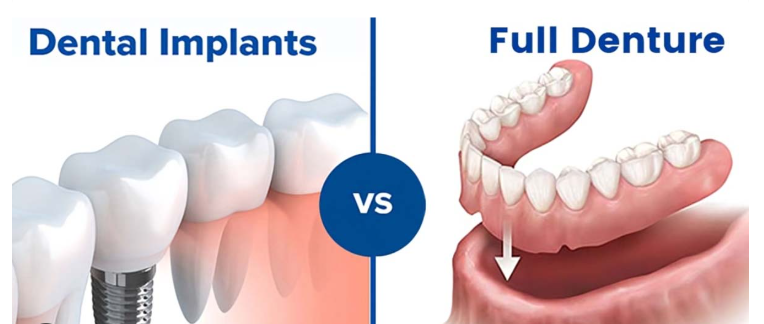
Dental Implants vs Dentures when several teeth are missing
Replacing several teeth may involve a partial denture, an implant-supported bridge, individual implant crowns, or a mixture of approaches. You do not necessarily need one implant for every missing tooth. The appropriate number and distribution depend on the position of the gaps and the proposed prosthetic design.
Here, Dental Implants vs Dentures may involve replacing several spaces with one prosthesis rather than comparing one artificial tooth at a time. A partial denture may be useful when teeth are missing in multiple areas and budget or medical suitability limits implant treatment. Its design must protect the remaining teeth and gums and distribute chewing forces appropriately. An implant-supported bridge can provide a fixed option in suitable areas, but careful cleaning around it remains essential.
Sometimes the best plan involves saving natural teeth through restorative, periodontal, or root canal treatment instead of extracting them simply to make the prosthetic design easier. Retaining healthy, restorable teeth may preserve important function and support.
Dental Implants vs Dentures when all lower teeth are missing
For someone without any lower teeth, Dental Implants vs Dentures is particularly relevant because conventional lower dentures can be harder to stabilise. This is one of the most useful situations in which to discuss implant retention. Conventional complete lower dentures can be difficult to control, especially after considerable bone loss. Patients may report movement while eating, soreness, difficulty with certain foods, or repeated use of adhesive.
A removable lower overdenture retained by two appropriately positioned implants can improve retention and patient satisfaction for many suitable patients. International consensus reports support the benefit of two-implant mandibular overdentures compared with conventional complete dentures and, for patient-reported outcomes, compared with single-implant retention.
More implants may be recommended when the anatomy, opposing bite, restorative design, or clinical risk factors justify them. A fixed full-arch bridge is another option, but it is not automatically necessary simply because you want greater security.
This is an important message for patients who think their only choices are an unstable denture or an expensive full-mouth fixed implant restoration. A properly planned overdenture may provide a meaningful middle ground.
Dental Implants vs Dentures when all upper teeth are missing
For upper teeth, Dental Implants vs Dentures requires attention to palatal coverage, lip support, and jawbone anatomy. The upper jaw creates a different set of challenges and opportunities. A conventional upper complete denture can be quite stable when it has good extension and a seal against the palate, although some patients dislike the palatal coverage or struggle with speech and comfort.
An upper implant overdenture or fixed restoration may help selected patients who want improved retention or reduced palatal coverage. Planning may be more complex because of bone distribution, the maxillary sinuses, available prosthetic space, and the need for suitable lip support. An upper overdenture commonly requires a greater number of implants than a typical two-implant lower overdenture, but the exact design varies.
In some people with significant tissue loss, a removable prosthesis may actually provide better control of lip support and access for cleaning than a fixed bridge. A trial denture setup and an assessment of facial support can be very informative before selecting a definitive option.
Can you begin with dentures and move to implants later?
Yes, in many cases. Dental Implants vs Dentures need not be a once-and-for-all decision. Your first treatment does not always have to be your final treatment. A removable denture may be made after extractions to restore appearance and function while the tissues heal. Later, implants can sometimes be placed to retain a new denture or support a fixed restoration.
However, later implant treatment is not always straightforward. Bone may have resorbed, the existing denture may not have enough space for attachments, or a new prosthesis may be needed. If you are considering implants eventually, tell your dentist early so that extraction, bone preservation, provisional dentures, and future implant positions can be planned together when appropriate.
Think of a denture as a possible long-term solution, a transitional solution, or part of a combined implant plan. It does not have to be a second-class choice.
The role of digital dentistry and 3D CBCT planning
A good comparison of Dental Implants vs Dentures should also consider how treatment is planned. A clinical examination establishes the condition of the gums, remaining teeth, jaw relationships, bite, and soft tissues. Digital technology can improve communication and support selected stages of treatment, but it does not replace professional judgement.
Intraoral scanning
A digital intraoral scanner records three-dimensional surface information. In suitable patients it can support restorative planning, communication with the laboratory, and fabrication of some prostheses. Conventional impressions are still useful in many denture cases, particularly when accurate recording of the movable soft tissues and denture borders is necessary.
CBCT imaging
When indicated for implant planning, cone beam computed tomography can reveal three-dimensional bone anatomy and the relationship of proposed implants to important structures. It can assist in assessing available bone and considering whether augmentation is needed. CBCT should be used according to clinical need, not automatically for every patient considering a denture.
A prosthetically driven plan
Ideally, the final position and shape of the replacement teeth guide the implant plan. The dentist considers where the teeth should be, how they will be supported, how you will clean them, and whether the restoration can be repaired or maintained. Planning only where bone appears available, without considering the finished teeth, can create avoidable prosthetic problems.
Digital dentistry does not guarantee success
Accurate scans and sophisticated software can improve planning but cannot eliminate healing problems, infection, hardware complications, or biological variation. Patient selection, surgical execution, prosthetic design, and long-term maintenance remain decisive.
What about implant-supported dentures? A practical third choice
Many comparisons of Dental Implants vs Dentures leave out the option that can make the greatest practical difference to a person struggling with a loose lower denture: the implant overdenture.
Imagine that you already have a removable lower denture. It looks acceptable, but you avoid eating outdoors because you are afraid it will shift. A well-planned overdenture may improve its retention without requiring the full cost and complexity of a fixed full-arch implant bridge.
The overdenture generally attaches to implants using special connectors. These may be individual attachments or a bar system, selected according to implant positions, space, hygiene access, and other factors. The denture can be removed for cleaning, and wear parts may need periodic replacement.
Its drawbacks deserve equal attention. Some movement under function may remain, depending on support and design. Attachments require maintenance. Food and plaque can collect around components if cleaning is inadequate. The denture itself may need reinforcement or replacement over time.
Nevertheless, it is an excellent option to discuss when you want better denture retention but also value easier removal for hygiene or a lower initial investment than a complex fixed bridge.
What many advertisements do not explain
The debate around Dental Implants vs Dentures is often reduced to phrases such as “permanent teeth,” “no more dentures,” or “eat anything immediately.” Patients deserve a more accurate explanation.
Before making a decision about Dental Implants vs Dentures, it helps to examine these eight common claims.
Myth 1: Implants last forever
Implants can provide many years of service, but there is no lifetime guarantee. Implant health depends on biological and mechanical factors, hygiene, health conditions, and ongoing professional care. The crown, bridge, or attachment may need maintenance or replacement even if the implant remains healthy.
Myth 2: Dentures always look artificial
High-quality dentures can look natural and restore facial support very effectively. Poorly designed implants can look unnatural too. A good aesthetic result comes from planning, not simply from the name of the treatment.
Myth 3: Everyone needs one implant for every missing tooth
Several missing teeth can often be restored with a carefully planned implant-supported bridge or full-arch prosthesis using fewer implants than teeth. The number required depends on many factors and must not be chosen solely from an advertisement.
Myth 4: Once implants are placed, gum disease is no longer a concern
Implants cannot develop tooth decay, but tissues around them can become inflamed or diseased. People with a history of periodontitis require particularly careful maintenance.
Myth 5: Fixed teeth need no special cleaning
Fixed implant restorations require thorough daily cleaning, often beneath and between prosthetic components. If a patient cannot access those areas, the design may need modification or another option may be preferable.
Myth 6: All dentures are equally unstable
Retention varies enormously with jaw anatomy, denture quality, saliva, bite, and patient adaptation. A new well-made denture may function very well even if an old one has become loose.
Myth 7: Same-day teeth means immediate normal chewing
Some carefully selected patients can receive an immediate provisional restoration. That does not mean every patient is suitable or that there is no healing period or dietary restriction. The definitive restoration may be delivered much later.
Myth 8: The most expensive option must be the best
A treatment is successful when it fits your health, function, comfort, appearance, budget, and ability to maintain it. More expensive technology or a fixed bridge is not always the right clinical answer.
Choosing the right treatment in Chinchwad, Pune
At Joglekar’s Dental Solutions, we believe that replacing missing teeth starts with understanding what you want to do comfortably again. Some patients want to enjoy their meals without movement of a lower denture. Others want to avoid surgery, restore lip support, or have a predictable replacement for a single missing tooth.
Our clinic has intraoral scanning and in-house CBCT facilities, which can support digital treatment planning when clinically indicated. We discuss suitable options, expected treatment stages, estimated costs, important limitations, and maintenance needs before proceeding. The final recommendation depends on examination and individual circumstances.
If you are considering Dental Implants vs Dentures in Chinchwad, Pimpri, or nearby PCMC areas, book a consultation to understand which options are genuinely appropriate for your mouth. Bringing an existing denture, old radiographs, and a list of current medicines can make the conversation more productive.