
Invisible aligners vs braces, which is really right for you? These 5 honest truths cover comfort, cost, timeline, and results before you decide.
Few orthodontic decisions generate as much genuine back-and-forth as invisible aligners vs braces. Both approaches move teeth using the same underlying biological principle, gentle, sustained pressure that gradually shifts teeth through bone remodeling, but the day-to-day experience, cost, and suitability for different cases can differ substantially.
This guide walks through 5 honest truths about invisible aligners vs braces, covering exactly how each works, what they actually cost, how comfortable they really are day to day, which cases each is better suited for, and how to think through the decision for your specific situation rather than relying on marketing claims alone.
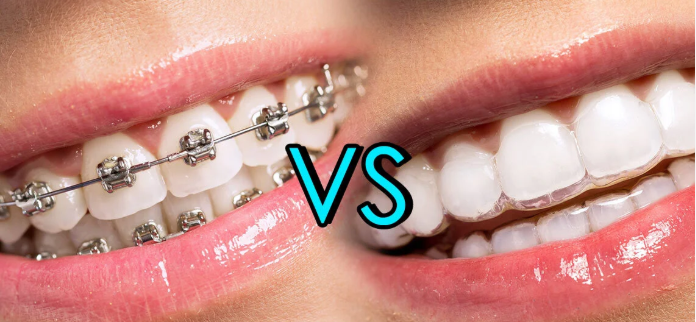
Truth 1: They Work the Same Way, But Feel Completely Different Day to Day
How Braces Work
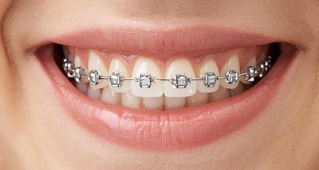
Traditional braces use metal or ceramic brackets bonded to each tooth, connected by an archwire that’s periodically tightened or adjusted by your orthodontist. This continuous, fixed pressure moves teeth steadily over the course of treatment, and because the appliance is permanently attached, there’s no reliance on patient compliance to keep it in place.
How Invisible Aligners Work
Clear aligners use a series of custom-fitted, removable plastic trays, each one slightly different from the last, gradually shifting teeth as you progress through the series, typically changing to a new tray every 1-2 weeks. Unlike braces, aligners rely entirely on patient discipline, they only work if worn for the recommended 20-22 hours a day.
This distinction, fixed versus removable, is really the foundation of nearly every other difference covered in this guide.
Truth 2: Comfort Favors Aligners, But Not Without Trade-offs
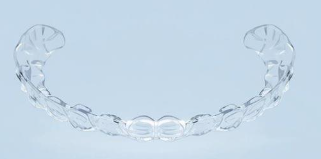
Most patients report a real comfort advantage with aligners. Smooth plastic trays don’t have the sharp brackets or wire ends that can irritate the inside of the cheeks and lips, a common early complaint with traditional braces. There’s also no food restriction with aligners, since they’re removed for eating entirely, whereas braces require avoiding sticky, hard, or crunchy foods that could damage brackets or wires throughout treatment.
That said, aligners aren’t without their own discomfort. Each new tray in the series brings a fresh round of pressure and tightness for the first day or two, similar in sensation to the soreness after a braces adjustment, just occurring more frequently since trays change every 1-2 weeks rather than every 4-6 weeks like a typical braces adjustment.
When weighing invisible aligners vs braces purely on comfort, aligners generally win on daily irritation, but the adjustment discomfort itself is a fairly similar experience either way.
Truth 3: Cost Differences Are Real in Invisible Aligners vs Braces, But Not Always in the Direction People Expect
This is one of the more surprising truths in the invisible aligners vs braces conversation. While aligners are often assumed to be significantly more expensive, the actual gap has narrowed considerably as aligner technology and competition have increased. In many cases today, the cost difference between the two options is smaller than patients expect, particularly for moderate cases.
That said, cost still varies based on:
- Case complexity, more involved corrections generally cost more regardless of which appliance is used
- Treatment duration, since longer treatment periods increase overall cost
- Provider and lab fees, particularly for aligners, since these often involve third-party lab manufacturing costs
- Material choice for braces, ceramic or lingual braces cost more than standard metal brackets
A proper consultation comparing both options for your specific case is the only reliable way to get an accurate cost comparison, rather than assuming one option is automatically cheaper.
Truth 4: Braces Still Win for More Complex Cases
This is an important, honest truth that marketing for clear aligners doesn’t always emphasize enough. While aligner technology has improved dramatically and can now address many moderate to even some complex cases, traditional braces still generally offer more predictable, precise control for significant rotations, severe crowding, major bite discrepancies, or cases involving jaw positioning issues.
The fixed nature of braces allows for more complex, three-dimensional tooth movement in a single continuous system, whereas aligners rely on a series of discrete steps that can be less effective for certain difficult movements, like significant rotation of round teeth (like canines) or major vertical repositioning.
When your case is genuinely complex, an honest orthodontic evaluation may steer the invisible aligners vs braces decision firmly toward braces, regardless of the appeal of a removable, less visible option.
Truth 5: Invisible Aligners vs Braces Discretion Matters More to Some Patients Than Others
For many adult patients specifically, the discreet appearance of aligners is the deciding factor in the invisible aligners vs braces decision, particularly for professionals in client-facing roles or anyone self-conscious about visible metal brackets. Ceramic braces offer a partial middle ground, less visible than traditional metal but still fixed and noticeable up close, but for patients prioritizing appearance above all else, aligners remain the more discreet option by a clear margin.
That said, this priority is genuinely personal. Some patients, particularly younger ones or those less concerned with visibility, find the “set it and forget it” nature of braces, no daily discipline required, no risk of losing a tray, more appealing than the added responsibility that comes with aligner compliance.
Side-by-Side Summary
| Factor | Braces | Invisible Aligners |
|---|---|---|
| Visibility | Clearly visible | Nearly invisible |
| Removability | Fixed, cannot remove | Fully removable |
| Food restrictions | Significant | None, since removed to eat |
| Daily discipline required | Low, no compliance needed | High, 20-22 hrs/day wear required |
| Best for complex cases | Generally more effective | Improving, but still more limited |
| Comfort | More irritation from brackets/wires | Smoother, but frequent tray-change soreness |
| Typical office visits | Every 4-6 weeks for adjustments | Less frequent, check-in based |
How to Decide Between Invisible Aligners vs Braces
Consider Braces If:
- Your case involves significant complexity, severe crowding, major rotations, or bite issues
- You’d rather not manage a removable appliance day to day
- You’re comfortable with visible brackets during treatment
- Predictability and precision matter more to you than discretion
Consider Aligners If:
- Your case is mild to moderate in complexity
- Discretion during treatment is a real priority
- You’re confident in your ability to maintain 20-22 hours of daily wear
- You want the flexibility to remove the appliance for special occasions or events
Ultimately, the invisible aligners vs braces decision should be guided by an honest evaluation of your specific case, not just personal preference alone, since the wrong choice for a complex case can mean a longer, less predictable treatment overall.
Frequently Asked Questions
Is treatment time different between invisible aligners vs braces? It varies by case. Mild to moderate cases often see similar treatment times, roughly 12-18 months, with either option. More complex cases may take longer with aligners if the movement is at the edge of what the technology can effectively address.
Can I switch from aligners to braces partway through treatment if needed? Yes, this happens occasionally when a case proves more complex than initially anticipated, and a good orthodontist will flag this possibility during your original consultation if your case is borderline.
Do both options require a retainer afterward? Yes, absolutely, retention is equally important regardless of which appliance was used during active treatment, since teeth can shift back without consistent retainer wear afterward.
Which is better for oral hygiene during treatment? Aligners generally make hygiene easier, since they’re removed for brushing and flossing, allowing normal, unobstructed cleaning. Braces require more careful technique around brackets and wires to avoid plaque buildup and decalcification.
Are invisible aligners suitable for teenagers, or only adults? Many aligner systems are now specifically designed for teenagers, including compliance indicators to help parents monitor wear time, though suitability still depends on the complexity of the individual case and the teenager’s likely discipline with wear time.
Conclusion
The invisible aligners vs braces decision ultimately comes down to your specific case complexity, your daily lifestyle, and how much you personally value discretion versus predictability. Both approaches are genuinely effective when used appropriately, the real key is an honest, case-specific evaluation rather than choosing based on assumptions about cost or comfort alone. A proper consultation, including imaging and a full bite assessment, is the only reliable way to know which option will actually deliver the most efficient, predictable result for your particular smile.
At Joglekar’s Dental Solutions, every orthodontic consultation includes an honest comparison of invisible aligners vs braces based on your specific case, ensuring the recommendation prioritizes your actual treatment outcome over any single appliance preference.