
Preventing cavities in children starts earlier than most parents realize. Get the essential, practical steps for a healthy smile, not painful decay.
Cavities remain one of the most common chronic conditions in childhood, more common than asthma, more common than allergies, and yet most cases are genuinely preventable with the right habits started early. Preventing cavities in children isn’t about one single trick, it’s a combination of small, consistent choices around diet, cleaning, and timely dental care that add up significantly over the years teeth are developing.
This guide covers everything worth knowing about protecting your child’s teeth from decay, from the biological reasons kids are more vulnerable in the first place, to age-specific strategies, common parenting mistakes, and exactly when professional intervention like sealants or fluoride treatments genuinely make a difference.
Why Are Children More Prone to Cavities Than Adults?
Thinner, Less Mineralized Enamel
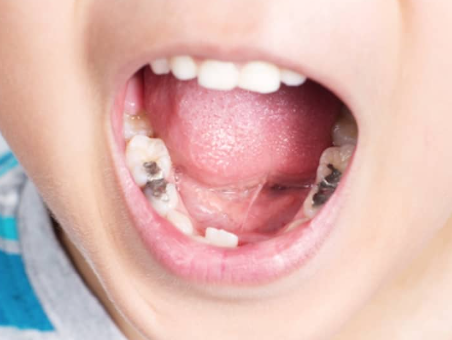
Baby teeth, and even newly erupted permanent teeth, have enamel that’s noticeably thinner and less densely mineralized than fully matured adult enamel. This makes early acid attacks from sugar and bacteria far more damaging in a shorter amount of time, one of the core biological reasons preventing cavities in children requires more proactive effort than adult dental care.
Developing Motor Skills
Young children simply don’t have the fine motor control to brush thoroughly on their own until around age 7 or 8. Missed spots, particularly along the gumline and between teeth, become the exact locations where early decay tends to start.
Bacteria Transmission From Caregivers
Cavity-causing bacteria, primarily Streptococcus mutans, aren’t present in a baby’s mouth at birth, they’re transmitted through everyday contact, sharing spoons, cleaning a dropped pacifier with your own mouth, or even close kissing. This is a genuinely underappreciated factor in preventing cavities in children, since a parent’s own oral health directly affects a child’s cavity risk from infancy.
Frequent Snacking and Sugary Diets
Children often eat and snack more frequently throughout the day than adults, and each sugar exposure triggers a fresh acid attack on enamel. Combined with less thorough brushing, this frequency is a major driver of childhood decay.
When Does Prevention Actually Need to Start?
Preventing cavities in children starts far earlier than most parents expect, even before the first tooth erupts. Wiping a baby’s gums with a clean, damp cloth after feedings establishes good habits and reduces early bacterial buildup. Once the first tooth appears, typically around 6 months, brushing should begin immediately with an appropriately sized, soft brush and a rice-grain amount of fluoride toothpaste.
Age-by-Age Strategies for Preventing Cavities in Children
Infants (0-1 Year)
- Wipe gums after feedings, even before teeth appear
- Avoid putting a baby to bed with a bottle of milk or juice, since prolonged sugar exposure overnight is a significant risk factor
- Begin brushing with a rice-grain amount of fluoride toothpaste as soon as the first tooth erupts
- Schedule a first dental visit by age 1, or within 6 months of the first tooth appearing
Toddlers (1-3 Years)
- Supervise brushing fully at this stage, children this age cannot brush effectively alone
- Transition to a pea-sized amount of fluoride toothpaste around age 3
- Limit juice intake significantly, water and milk should be the primary daily beverages
- Start introducing flossing once teeth begin touching each other
Preschool and Early School Age (4-7 Years)
- Continue supervising brushing, even if your child insists on doing it “themselves,” a parent should still do a thorough follow-up brush
- Discuss dental sealants with your dentist as molars come in, since these back teeth have deep grooves particularly prone to decay
- Reinforce consistent twice-daily brushing and daily flossing as an established routine, not an occasional chore
School Age (8+ Years)
- Children can generally brush independently by this age, but occasional spot-checks are still worthwhile
- Reinforce mindful snacking habits, since school-age kids often have more independent access to sugary snacks
- Keep up with regular 6-month checkups, since cavity risk doesn’t disappear once independent brushing begins, it simply shifts to different risk factors
The Core Habits Behind Preventing Cavities in Children
Consistent, Thorough Brushing
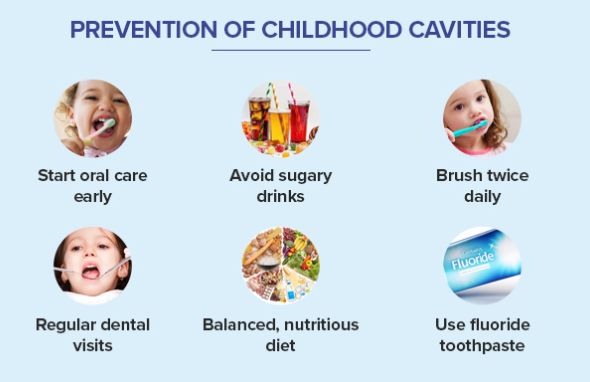
Twice-daily brushing with fluoride toothpaste remains the single most impactful habit. Technique matters as much as frequency, gentle, small circular motions covering all surfaces, including the back molars that are easy to rush past.
Fluoride, Used Appropriately
Fluoride strengthens developing enamel and helps reverse very early stages of decay before a cavity fully forms. Both toothpaste and, when recommended by a dentist, professional fluoride varnish applications play a meaningful role in preventing cavities in children, particularly for kids assessed as higher risk, this helps in Preventing Cavities in Children.
Dental Sealants
Sealants are a thin protective coating applied to the chewing surfaces of back molars, where deep grooves make brushing alone less effective at fully clearing food and bacteria. For many children, sealants are one of the most effective, low-effort tools available for preventing cavities in children specifically in these high-risk areas.
Limiting Sugar Frequency, Not Just Quantity
How often a child eats something sugary matters more than the total amount consumed in a day. Constant grazing on sweets or juice throughout the day keeps enamel under near-constant acid attack, while the same amount consumed in one sitting gives enamel time to recover afterward.
Regular Dental Checkups
Routine visits every 6 months allow a dentist to catch the very earliest stages of decay, often before it’s even visible to a parent, when treatment is simplest and most conservative.
Common Mistakes Parents Make Without Realizing It
- Assuming baby teeth “don’t matter” since they’ll fall out anyway. Baby teeth hold space for permanent teeth and maintain proper chewing and speech development, decay in baby teeth is a genuine concern, not something to dismiss.
- Sharing utensils or cleaning a pacifier by mouth. This directly transmits cavity-causing bacteria to a child who wouldn’t otherwise have them yet.
- Relying only on juice as a “healthy” drink. Even 100% fruit juice is high in sugar and contributes meaningfully to cavity risk when consumed frequently.
- Skipping the follow-up brush for young children. Letting a 4 or 5-year-old brush entirely unsupervised often leaves significant plaque behind, since fine motor control for thorough brushing isn’t fully developed yet.
- Waiting for pain before scheduling a dental visit. Early cavities are often painless, waiting for discomfort means waiting until decay has already progressed further than necessary.
Frequently Asked Questions
At what age should preventing cavities in children actually begin? Effectively from birth, wiping gums before teeth even appear, and definitely by the time the first tooth erupts around 6 months, when brushing should begin immediately.
Are dental sealants really necessary, or just an upsell? They’re genuinely effective and widely recommended by pediatric dentists specifically because back molars have deep grooves that are difficult to clean thoroughly even with good brushing habits.
Is fluoride toothpaste safe for young children? Yes, when used in the correct amount for their age, a rice-grain amount under age 3 and a pea-sized amount afterward, with supervision to avoid swallowing excess toothpaste.
Can cavities in baby teeth actually affect permanent teeth? Yes. Untreated decay or infection in a baby tooth can affect the developing permanent tooth underneath it, and early tooth loss from decay can also cause alignment issues as permanent teeth erupt.
How much does frequent snacking really matter compared to occasional treats? Quite a lot. Frequency of sugar exposure is one of the strongest predictors of cavity risk, since each exposure triggers a fresh acid attack, regardless of the total quantity consumed that day.
Conclusion
Preventing cavities in children isn’t about being perfect, it’s about consistency in a handful of genuinely high-impact habits: proper brushing supervision, sensible sugar frequency, fluoride use, sealants when appropriate, and regular checkups that catch small issues before they become bigger ones. Starting these habits early, even before the first tooth appears, gives your child the strongest possible foundation for a genuinely healthy smile rather than a childhood marked by painful, avoidable decay.
At Joglekar’s Dental Solutions, pediatric checkups include a full cavity risk assessment and personalized guidance for parents, ensuring preventive strategies are tailored to each child’s specific habits and needs.