
If you’ve ever left a dental visit wondering why one tooth needed a filling while another needed a crown, you’re not alone. The crowns vs fillings decision comes up almost every day in our clinic, and understanding how it’s made helps you trust your treatment plan instead of just taking our word for it.
Here’s a complete breakdown of the crowns vs fillings decision, explained simply.
Crowns vs Fillings: What’s the Actual Difference?
A filling repairs a small to moderate area of decay or damage. We clean out the affected part of the tooth and fill the space with a durable material, restoring shape and function in a single visit.
A crown is a full cap that covers the entire visible portion of a tooth. It’s used when there’s too much damage for a filling to reliably support, or when the tooth’s structure is too weak to hold up on its own.
In the crowns vs fillings comparison, think of a filling as patching a problem area, while a crown rebuilds and protects the whole tooth.
Crowns vs Fillings: When Each One Makes Sense
A filling is usually the right call when:
- The decay or damage is small to moderate
- A significant amount of healthy tooth structure remains
- The tooth’s overall strength isn’t compromised
- The affected area is well-defined and easy to access
A crown becomes necessary when:
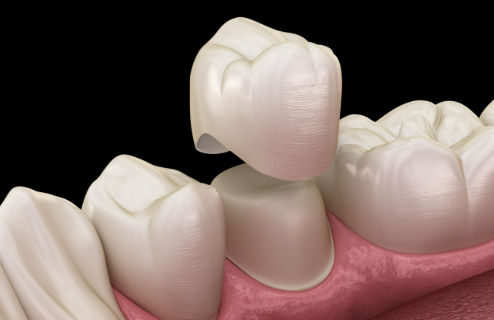
- Decay is extensive, leaving too little healthy structure for a filling to hold reliably
- An old filling is large, cracked, or failing
- There’s a significant fracture that a filling alone can’t stabilize
- The tooth has had root canal treatment and needs extra protection
- Chewing forces risk further breakage without full coverage
In the crowns vs fillings decision, a filling might technically fit into a badly damaged tooth, but it often won’t hold up long-term. That’s exactly the kind of case where a crown is the more reliable choice.
How We Make the Crowns vs Fillings Decision
1. Clinical examination We assess how much healthy tooth structure remains, along with the location and extent of any damage.
2. Imaging X-rays or CBCT scans, when needed, show us what’s happening beneath the surface, including root condition and bone level.
3. Bite and chewing force Back teeth handle far more chewing force than front teeth, so the threshold for recommending a crown is often lower there.
4. Long-term outlook We weigh not just what fixes the problem today, but what actually holds up for years, rather than starting a cycle of repeated repairs.
What Each Procedure Actually Involves
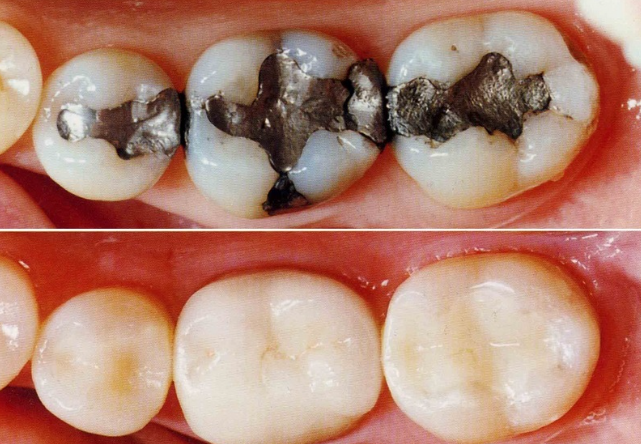
Filling procedure:
- Numbing the area
- Removing decay
- Filling the space with composite material
- Shaping and polishing, completed in one visit
Crown procedure:
- Numbing the area
- Reshaping the tooth to fit the crown
- Taking a digital scan or impression
- Placing a temporary crown while the permanent one is made
- Fitting and cementing the final crown, often faster with in-house digital scanning
Crowns vs Fillings: Cost and Longevity
Fillings are generally more affordable and quicker. But if a tooth genuinely needs a crown, a filling alone will likely fail again, leading to repeated visits and a higher cost over time. A crown, while a bigger upfront investment, is built to protect the tooth for the long run when that level of support is truly needed.
Why Getting the Crowns vs Fillings Call Right Matters
This decision isn’t about upselling, it’s about matching the treatment to what the tooth genuinely needs to last. An unnecessary crown removes more healthy structure than required. An inadequate filling on a severely damaged tooth often fails within months, leading to more invasive treatment later.
Still Not Sure Which One Your Tooth Needs?
Every case is different, and the right answer in the crowns vs fillings decision depends on what we actually see during examination and imaging. Come in, and we’ll walk you through exactly what your tooth needs and why, no guesswork involved.